

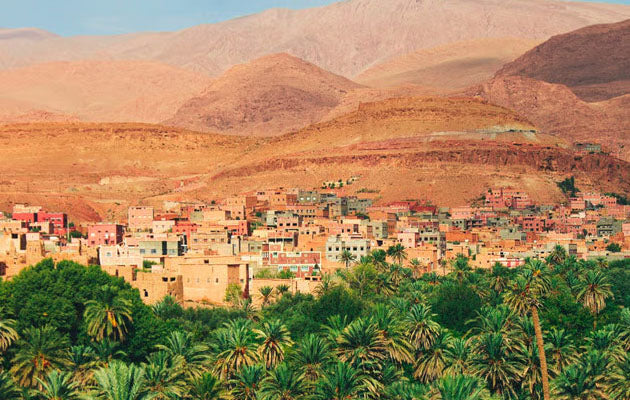



Agadir And the Atlantic Coast
A seaside sweep of sand, surf, and salt air that defines Morocco’s western edge
Agadir sits low and open on Morocco’s Atlantic coast, its wide bay shaped by wind, water, and light. A long sweep of sand runs south from the white marina, backed by palm-lined promenades and steady sun that defines the rhythm of the city year-round. Just up the coast, Taghazout remains tied to the ocean — a working fishing village turned surf outpost, known for breaks that draw riders from around the world.
agadir & taghazout | morocco
An Ocean-Lover's Dream Come True

Surfer Central | Activities
North of Agadir, Taghazout still feels tied to the ocean. What began as a fishing village now centres on the waves, with boards stacked outside cafés and the day paced by tide and swell. The coastline stretches for kilometres, backed by foothills of the High Atlas, the breaks varied enough to suit beginners and experienced surfers alike — a reputation cemented decades ago and still holding strong.

Sandy Stretches Beneath the Kasbah
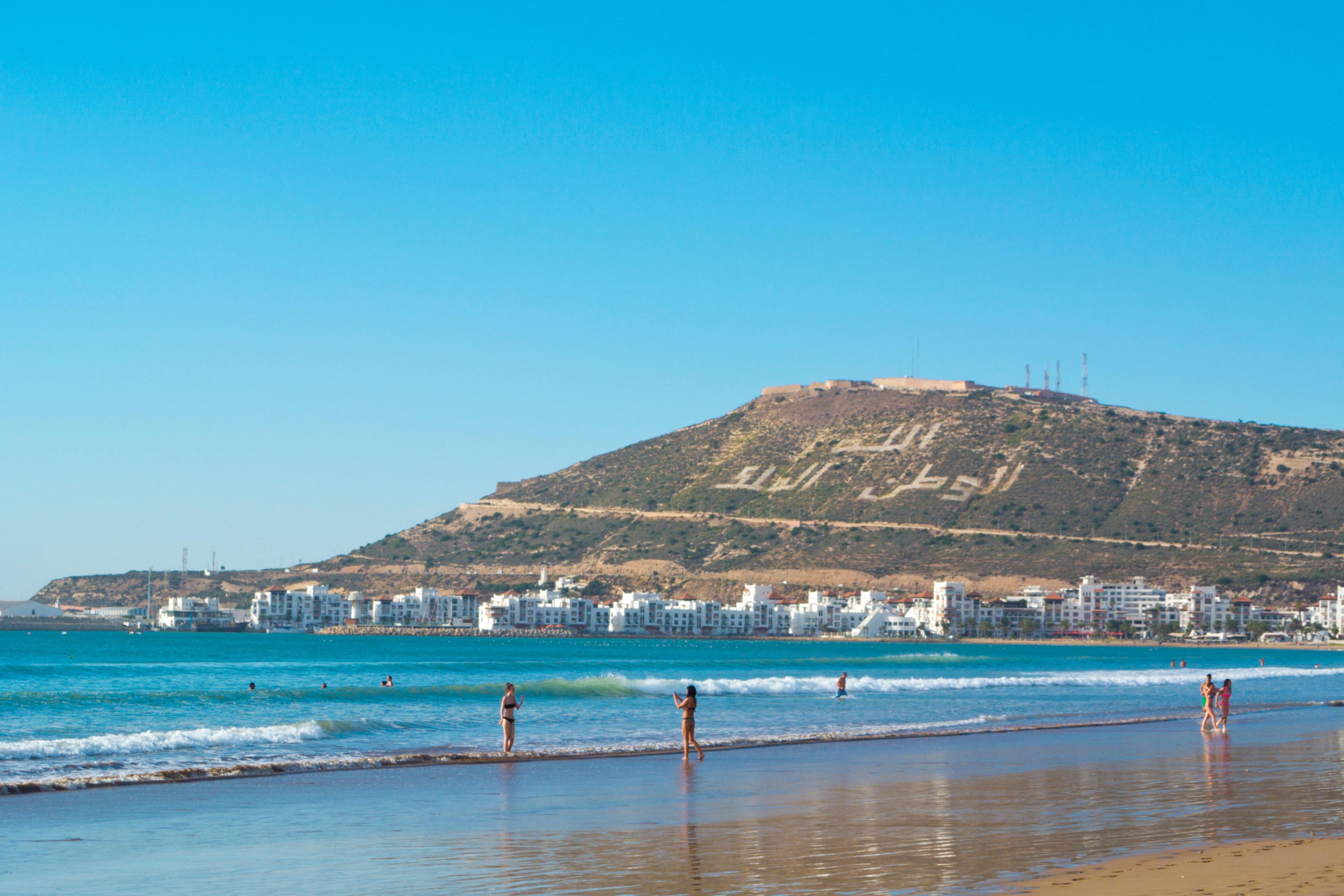
Agadir’s shoreline runs long and open, a broad sweep of sand facing the Atlantic and shaped by light, wind, and tide. The city lives outdoors here — promenades busy from morning through late afternoon, the sea rarely out of view. Cafés and restaurants line the water’s edge, tables turned toward the horizon, menus built around what comes in from the port and what suits the heat of the day.

Local Flavour | Food Journeys
Eating here happens close to the water. Simple rooms, open kitchens, and tables pulled tight together, where grilled fish, salads, and flatbreads arrive without ceremony. You decide what’s good by returning the next day.
Life Along the Promenade
Crashing waves, evening walks, and space to slow down
Agadir sits below its hilltop kasbah with a working port to one side and a long beach unfurling along the bay. The city you see today is largely post-1960 — rebuilt after the earthquake with wide streets and a functional grid.
We love wandering through the bustling Souk El Had, where the scent of cedarwood and spices fills the air away from the beach. The quiet eucalyptus forests surrounding the city are also perfect for a secluded morning horse ride as the mist lifts.

Sun, Wind, and Long Days
As trade winds ease as the day wears on, Much of Agadir’s energy gathers along the shore
Families gravitate to the sand, visitors settle into an easy routine, and the promenade becomes the city’s most animated stretch — open, spacious, and comfortably lived in.
Sun is the constant here. Light holds late, and the curve of beach south of the marina stays clear and inviting for most of the year.

Agadir Oufella
Suny blue skies overhead, golden sand underfoot, and the ancient mountain kasbah observing it all
You feel it before you see it. The climb pulls you up and away from the city, past switchbacks and scrub, until the Atlantic spreads out in full view — beach curving south, port cranes still, the grid of Agadir laid flat below. What remains of the Kasbah sits quietly at the summit, stone walls weathered and sparse, marked more by absence than ornament after the earthquake.
It’s a place for stopping rather than circling. Locals come for the air, the light, the long look back toward the sea. As the sun drops, the city softens, shadows stretch across the bay, and Agadir makes the most sense from right here — open, unforced, and facing outward.

Flora and Fauna
A protected landscape where birdlife, coastal cliffs, and cultivated valleys meet.g
The area supports more than two hundred bird species, including the rare bald ibis, alongside antelope, wild boar, and mongoose. Walking trails cut through open ground and scrub, offering long views and a sense of how lightly the land is still inhabited.
Near Tifnit, sheer rock faces are etched with the remains of ancient cave dwellings, their carved rooms set directly into the cliff. Around them, vegetation continues to return — low greenery spreading across ground once left bare, reshaping the landscape season by season.
After winter, argan and almond trees come into fruit, and wildflowers appear across the hillsides, feeding both bees and the local honey trade. Following these routes offers a clear view into how agriculture, food, and daily life remain closely tied to the land here.

Local Artisans | Agadir, Morocco
Amazigh Weaving
Weaving around Agadir happens inland, in the villages of the Souss Valley and the Anti-Atlas, where Amazigh women still work upright looms into the rhythm of daily life.
Hanbel blankets and flatweaves come off the loom dense and weighty, dyed in saturated reds, ochres, blacks, and ivory, their geometric patterns carrying regional meaning rather than decoration for its own sake. Many pieces trace back to Taznakht and Aït Ouaouzguite, where cooperative workshops keep the craft moving without shortcuts or mass production.


NEXT STEP → START CUSTOMIZING YOUR MOROCCO TRIP
Because we're from Morocco, and have lived throughout the Kingdom, we can offer you unmatched expertise in planning an unforgettable Morocco holiday.
What you can expect from Journey Morocco