

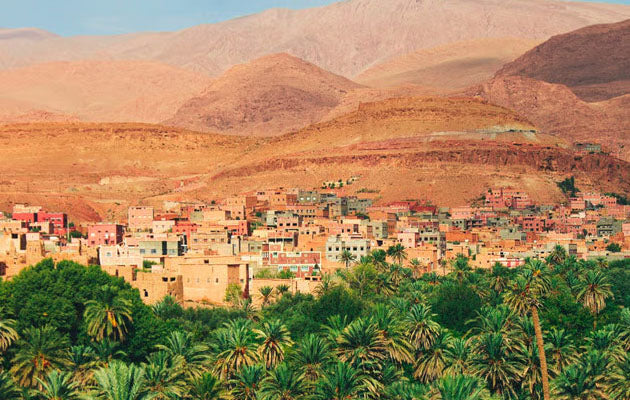



What to See & Do in Ouarzazate
Visit the Tifoultoute Kasbah for a panoramic view of the Ouarzazate River valley and the snow-capped Atlas peaks in the distance
For a deeper look at local life, spend an afternoon in the craft workshops of the city’s Artisan Centre, where weavers specialise in the region's signature heavy wool carpets.

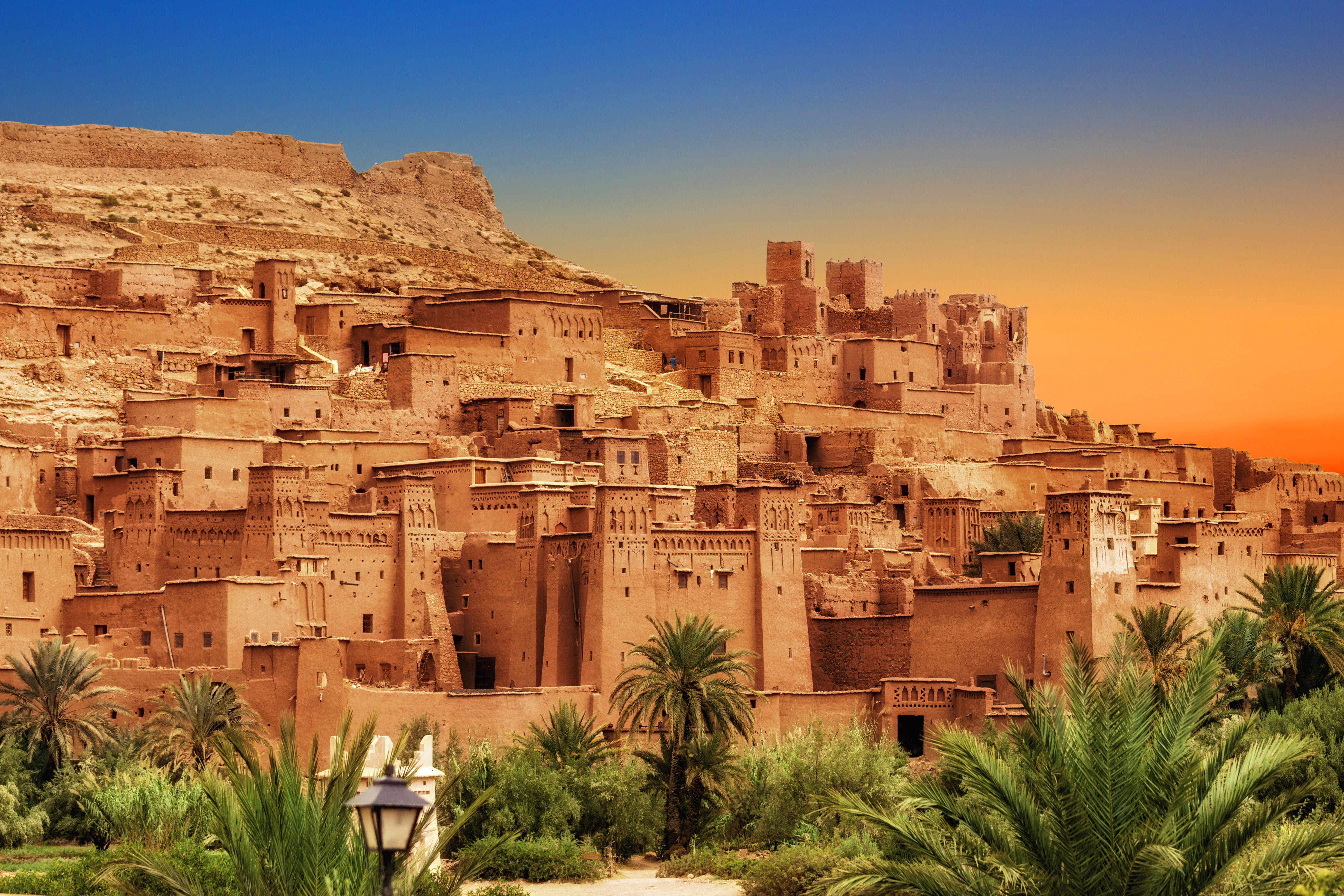
Uncover the mysterious corridors of Aït Ben Haddou
A fortified village shaped by trade, defence, and desert life
Narrow passages thread between earthen walls, their surfaces pressed smooth by centuries of hands, heat, and passage.
Stone underfoot gives way to packed earth as the kasbah tightens and opens in turns, guiding movement upward through courtyards, thresholds, and lookout points. The architecture is practical and exacting, built from mudbrick, straw, and timber sourced from the surrounding valley, repaired and rebuilt as part of daily life. Light filters in sparingly, catching edges of doorways and parapets before disappearing again. Walking here reveals how the village worked, how it protected what mattered, and how everything was designed to endure the desert rather than resist it.

Take a cool pause
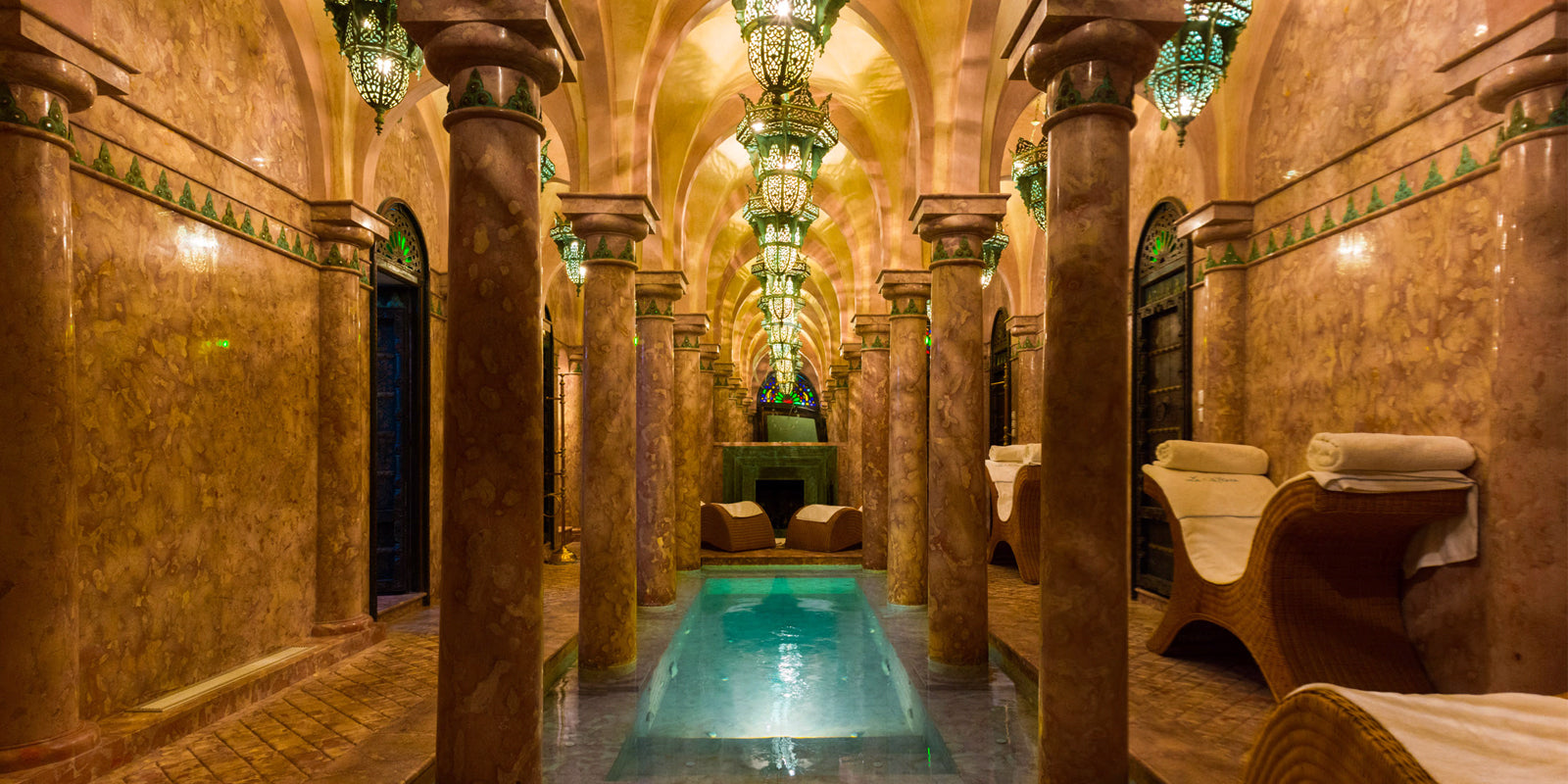
Behind plain exteriors, inviting mountain riads open to traditional courtyards
Rooms turn inward around a central pool, where cool water tempers the heat and light filters through arcades and planted edges.
Rooted in Amazigh building traditions, this domestic architecture prioritises privacy, climate control, and inward focus, shaped by environment, family life, and faith. T
all arches, exposed timber beams, and tiled surfaces soften sound and ease movement through the space. Time spent here reveals how Moroccan domestic design creates calm through enclosure, using proportion and restraint to turn shelter into a place of ease.

Experience the unexpected
A private hot air balloon flight reveals the high atlas mountains from a rare vantage
As dawn breaks, you’ll watch the ksar of Aït Ben Haddou emerge from the valley, its stacked earth buildings and passageways revealed in full.
From above, the scale and organisation of this UNESCO World Heritage site come into view, set against the surrounding kasbahs and the long rise of the High Atlas. It’s an unforgettable moment that offers a little-seen perspective on one of Morocco’s most significant archeological sites.
After landing, you’ll be welcomed with mint tea or fresh juice and a traditional Moroccan breakfast. Then, with an expert guide alongside you, you’ll explore the ksar on foot, moving through narrow corridors and past carved details that speak to daily life along this historic trading route.

Find a hidden treasure
Browse the kasbah souks in this living showcase of Amazigh craft, colour, and exchange
Textiles pile high, hung from shaded stalls, laid across stone and earth as if part of the architecture itself.
Handwoven Berber rugs carry the language of the High Atlas in wool and dye: bold geometry, protective motifs, colours pulled from mineral soils, saffron, and indigo. Metal trays catch the sun, leather hangs softening with use, and sellers greet passers-by with the easy familiarity of a place shaped by trade. This is not a showroom but a working souk, where objects are made to travel, to be used, and to last. Time here sharpens your eye for regional craft and the quiet confidence of goods created for daily life.
Live the history of morocco

Stand at the edge of an empire
From the heights of the ksar, Aït Ben Haddou stretches outward in terraces of rammed earth, towers, and hidden passages
In the 11th century, this village was constructed as a fortified settlement designed to house extended families, store grain, and control movement along trans-Saharan trade routes linking Marrakech to the desert beyond.
The ascent follows daily life as it once was: You can walk its passageways freely, climbing between communal granaries, defensive towers, and family homes built from rammed earth and timber.
Higher up, the view opens across the Ounila Valley, revealing why this position mattered for surveillance, supply, and survival. Its preservation has made it a rare place where history remains accessible, a setting strong enough to stand in for ancient cities on screen, from Gladiator to Lawrence of Arabia, and still grounded in the realities that shaped life here.

Step into Morocco’s southern frontier
Ouarzazate is a city of sublime contrast nestled in the heart of the High Atlas Mountains
Whether canvassing the narrow medina or visiting a movie studio lot, each place in this charming city has its own contours and contexts, and there is truly something here for every traveller.
The high ksar of Aït Ben Haddou – and the magnificent green valleys that stretch below it – seem worlds away from the intricate chambers of Marrakech’s Saadian Tombs or the peaceful quietude of Majorelle Garden’s blue-green verandas.
From the thrill of a close-up film-set encounter at Atlas Studios to the peaceful desolation of the surrounding landscape, Ouarzazate offers a rare range of experiences. This is the place where it all began; where the deepest roots of Morocco can be traced.


Venture deeper into the Atlas Mountains
You’ll weave between villages and valleys alongside one of our expert mountain guides
After a traditional Moroccan breakfast at your riad, you’ll visit the medina before heading deeper into the High Atlas Mountains, moving through limestone peaks, cultivated valleys, and high-altitude plateaus shaped by centuries of seasonal life. The terrain supports a rich ecosystem, including Atlas cedars and, in some areas, Barbary macaques.
After awhile, you’ll arrive at the home of a local Berber family, where a meal of home-cooked couscous or tagine is shared around the table, followed by conversation about daily village life. The afternoon is unhurried. Time to rest, to eat well, to listen to Moroccan drums, or to step out again into the foothills beyond.

Exit history, enter legend
From here, the landscape shifts from lived history to cinematic myth
Beneath bright, blue skies you’ll take a break in a traditional Moroccan tent, where you can plan a scenic hike, relax with mint tea, or, explore in the shade of the Ksar, with its steps, alleys, and tiny galleries.
From here, the landscape shifts from lived history to cinematic myth. You’ll visit the stone set built for Gladiator, where the famous battle scenes were filmed, and climb the purpose-built mountain constructed for the production. Standing on its upper terraces gives a clear sense of why this terrain has been used to represent vast, stark, and monumental ancient worlds on screen.

A verdant, dreamlike blend of southern Amazigh culture and Moroccan imperial style
A confluence of cultures
Ouarzazate — shaped by successive Amazigh dynasties, trans-Saharan trade routes, and later Alaouite expansion — sits at a strategic hinge between mountain, valley, and desert.
Long used as a point of control and exchange rather than a single monumental capital, it grew through kasbahs, fortified villages, and cultivated riverbanks rather than grand palaces. Riven by plunging valleys and rising plateaus, Ouarzazate is defined by contrast in terrain and scale; home to working ksour, palm-lined avenues fed by the Draa and Ounila systems, and a built landscape adapted to heat, defence, and seasonal movement. From here, routes lead south toward the desert and east into narrow gorges and waterfalls, placing the city at the crossroads of Morocco’s most dramatic shifts in geography and way of life.




NEXT STEP → START CUSTOMIZING YOUR MOROCCO TRIP
Because we're from Morocco, and have lived throughout the Kingdom, we can offer you unmatched expertise in planning an unforgettable Morocco holiday.
What you can expect from Journey Morocco