

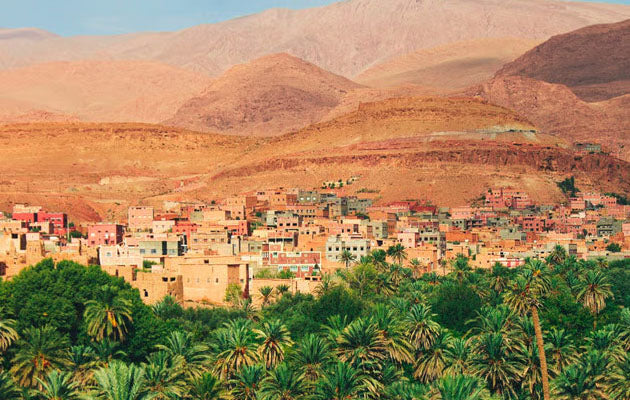



Unearthing Volubilis
Of olive groves, ancient arches, and the Roman frontier
Thought to be abandoned over a millennium ago, these ruins mark ancient foundations, terraces, and market pathways.
Embedded in the fertile plains near Meknes, the site was once a bustling capital of over 20,000 people that thrived on the production of olive oil and grain.
Today, Volubilis stands as a weathered monument to the endurance of Roman engineering, offering a quiet, evocative alternative to the crowded, often less well-preserved ruins of Europe.

An Ancient Crossroads
Bridging the gap between myth and modernity
Rested from your travels, we’ll take you out to Volubilis where you’ll step through the ancient gates to discover the most impressively preserved Roman city in Africa.
It sets the perfect tone for your journey through Morocco’s imperial history. With an expert guide to lead you through its colonnaded streets and judicial basilicas, you’ll be in the best possible company to discover the city’s historical secrets.

A Gallery of Antiquity
Preserving the intricate artistry of the Roman frontier
Beyond the sprawling columns and open-air plazas lies the Volubilis Site Museum, a modern sanctuary built to house the most delicate treasures unearthed from the sun-drenched plains.
Here, the register of history shifts from the monumental to the intimate. You’ll find yourself face-to-face with exquisite bronze statuary, intricate jewelry, and everyday artifacts that offer a rare glimpse into the sophisticated lives of those who once called this outpost home. The museum serves as a vital key to the site, meticulously contextualizing the ruins and showcasing the artistic mastery that flourished at the very edge of the Roman world. It is the perfect place to pause and reflect on the craftsmanship of the past before you emerge back into the brilliant Moroccan sunshine.


A World Heritage Wonder
Fact and fiction at the edge of the empire
This UNESCO World Heritage site is a place that defies imagination; it is one that you have to experience for yourself to truly grasp the scale of the Roman reach.
Veiled in history, we’ll send you in with an expert to separate fact from fiction, linking the ruins to the modern-day culture of the nearby Berber villages. Having glimpsed the "Blue Pearl" of Chefchaouen or the labyrinth of Fes, the open-air grandeur of Volubilis provides a breathtaking breath of fresh air and a deep sense of historical perspective.

A Passage through Time
Tracing the echoes of an imperial past
There’s a magic in these ruins.
You can feel the weight of history as you trace the Roman chariot ruts etched into the limestone paving of the Decumanus Maximus, frozen in time long after the last merchant passed through.
Or when you stand amidst the wild wildflowers and olive groves of Volubilis, following the path of the Berber and Roman souls who transformed this fertile plain into a grand imperial capital. It is a place where the echoes of ancient North Africa still linger, from the intricate myths told in the floor mosaics to the storks that now keep watch from the tops of weathered Corinthian columns.

Mosaics and Mountains
A masterpiece of art carved into the Moroccan landscape
Rested from your travels, we’ll take you out to Volubilis where you’ll step through the ancient gates to discover the most impressively preserved Roman city in Africa. It sets the perfect tone for your journey through Morocco’s imperial history. With an expert guide to lead you through its colonnaded streets and judicial basilicas, you’ll be in the best possible company to discover the city’s historical secrets.


On fallen kings, Berber fire, and the revolt of 40 AD
Shadows of Resistance
Beneath the serene beauty of the Zerhoun plains lies a storied layer of defiance.
In 40 AD, the calm of this imperial outpost was shattered following the assassination of King Ptolemy of Mauretania by the Emperor Caligula. This act of Roman betrayal sparked a fierce Berber uprising, led by the freedman Aedemon, that surged through the valley and challenged the very foundations of the Roman presence.
As you walk the sun-baked stones, your guide will recount the echoes of this ancient struggle—a time when the local tribes rose to reclaim their ancestral lands from the tightening grip of the empire. It is a powerful reminder that Volubilis was never just a passive colony, but a landscape forged in the heat of resistance and the unyielding spirit of the Berber people.
NEXT STEP → START CUSTOMIZING YOUR MOROCCO TRIP
Because we're from Morocco, and have lived throughout the Kingdom, we can offer you unmatched expertise in planning an unforgettable Morocco holiday.
What you can expect from Journey Morocco