


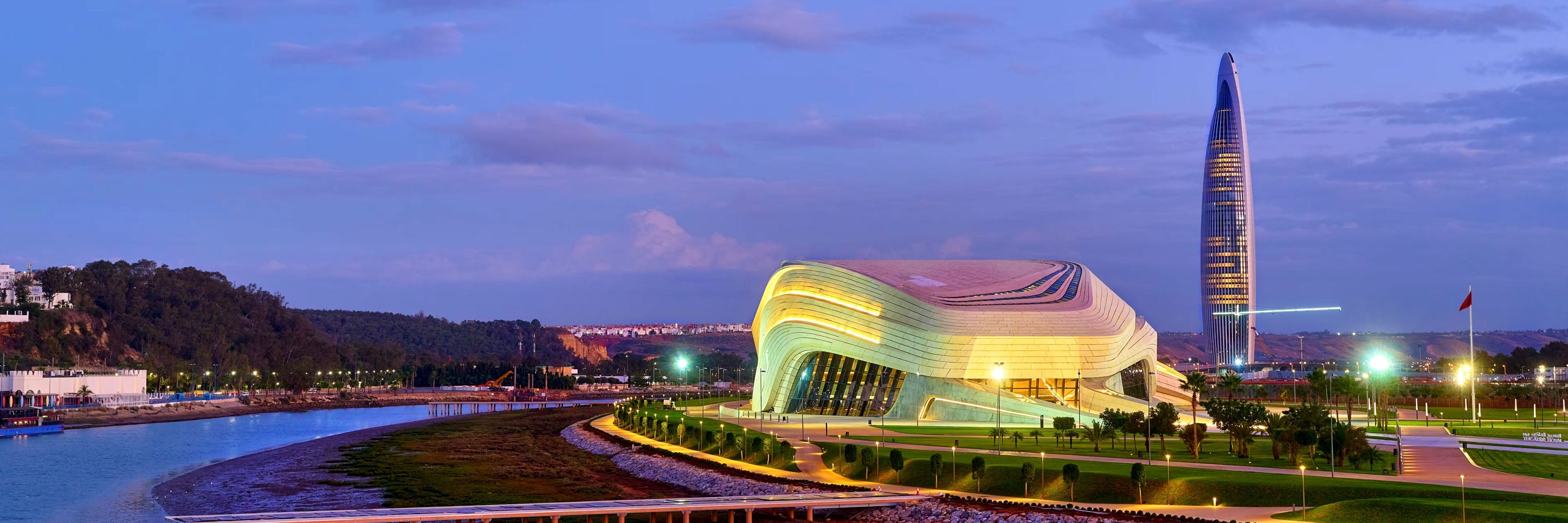

A Plate to Share
Moroccan meals are meant to be shared. Dishes are placed in the middle, bread passed by hand, conversation folding in as naturally as the food itself. Eating here is unforced and unremarked, woven into daily life. To understand Rabat, you start at the table.
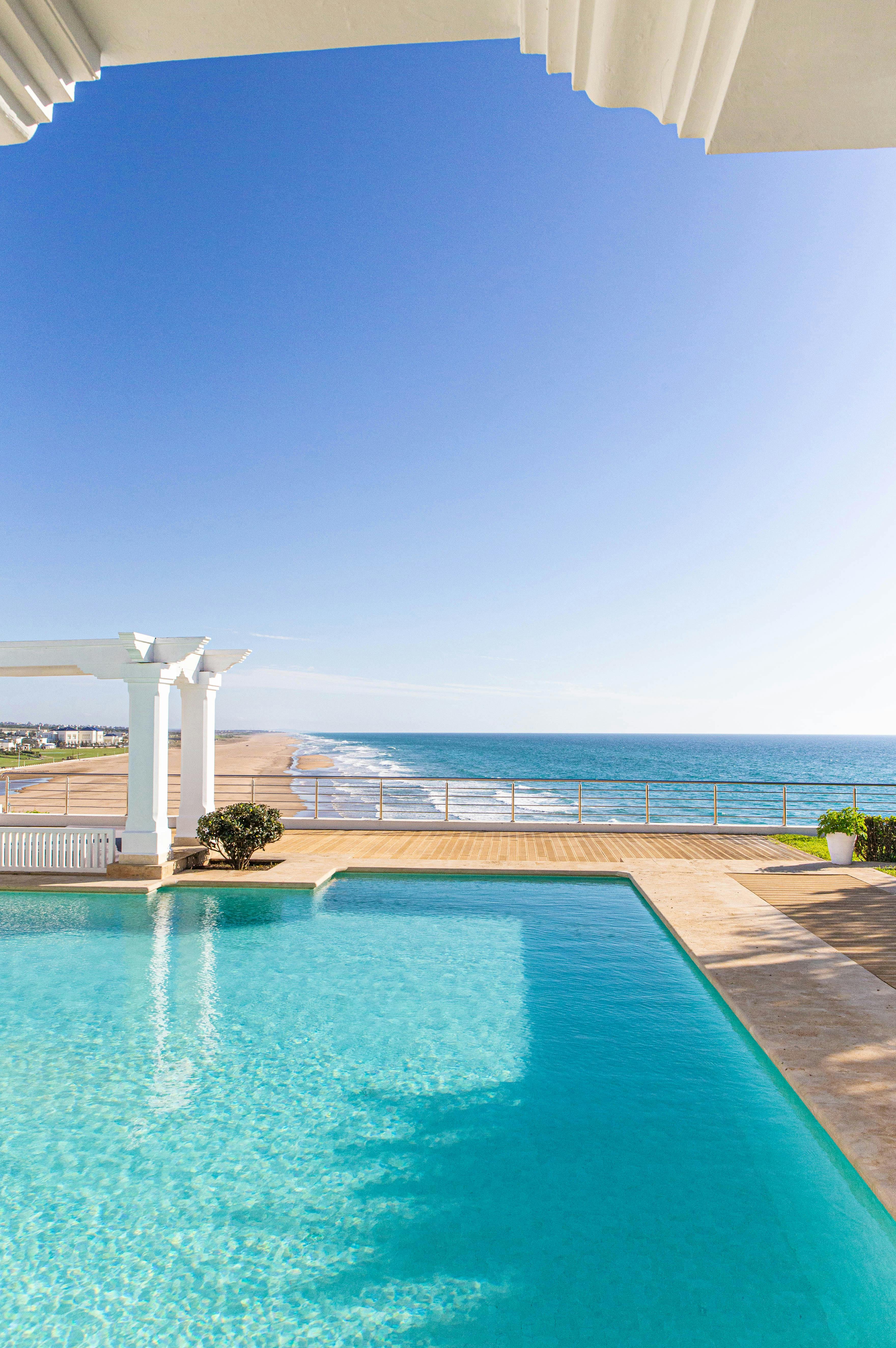
Salt in the air
White columns open onto the Atlantic, where the shoreline stretches wide and unbroken. Waves arrive in even sets, the beach unfolding along the city’s edge. Salt and breeze move freely, with light travelling across water and stone. Rabat faces the ocean in full view, shaped by horizon and tide. A capital that knows how to move.
What to See & Do in Rabat
Stroll through the modern district of Agdal for a taste of upscale Parisian-style cafes and high-end boutiques
For a historical contrast, visit the Museum of History and Civilisations to see one of the world's most impressive collections of Roman bronzes excavated from the nearby plains.

By the Ramparts
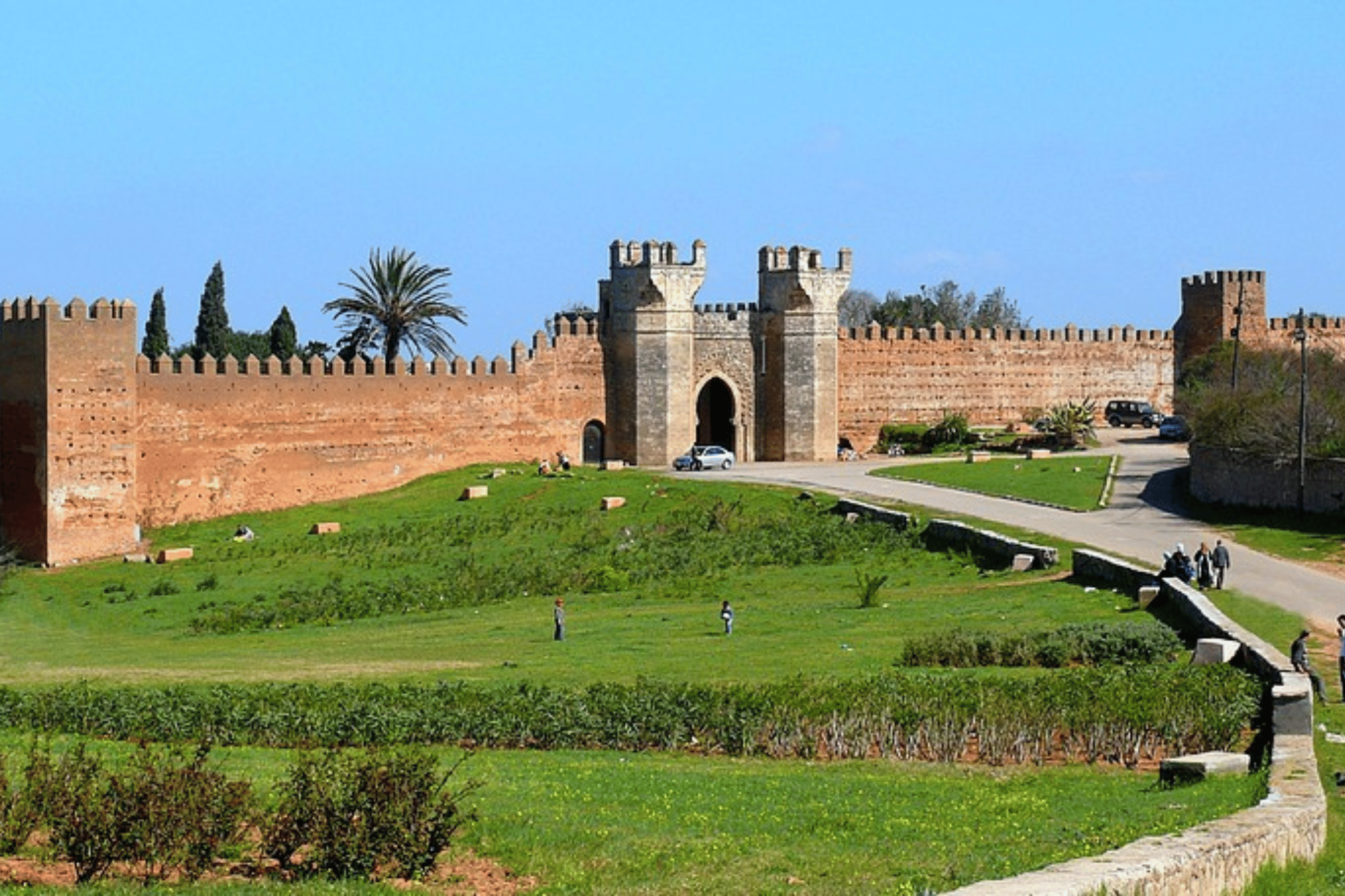
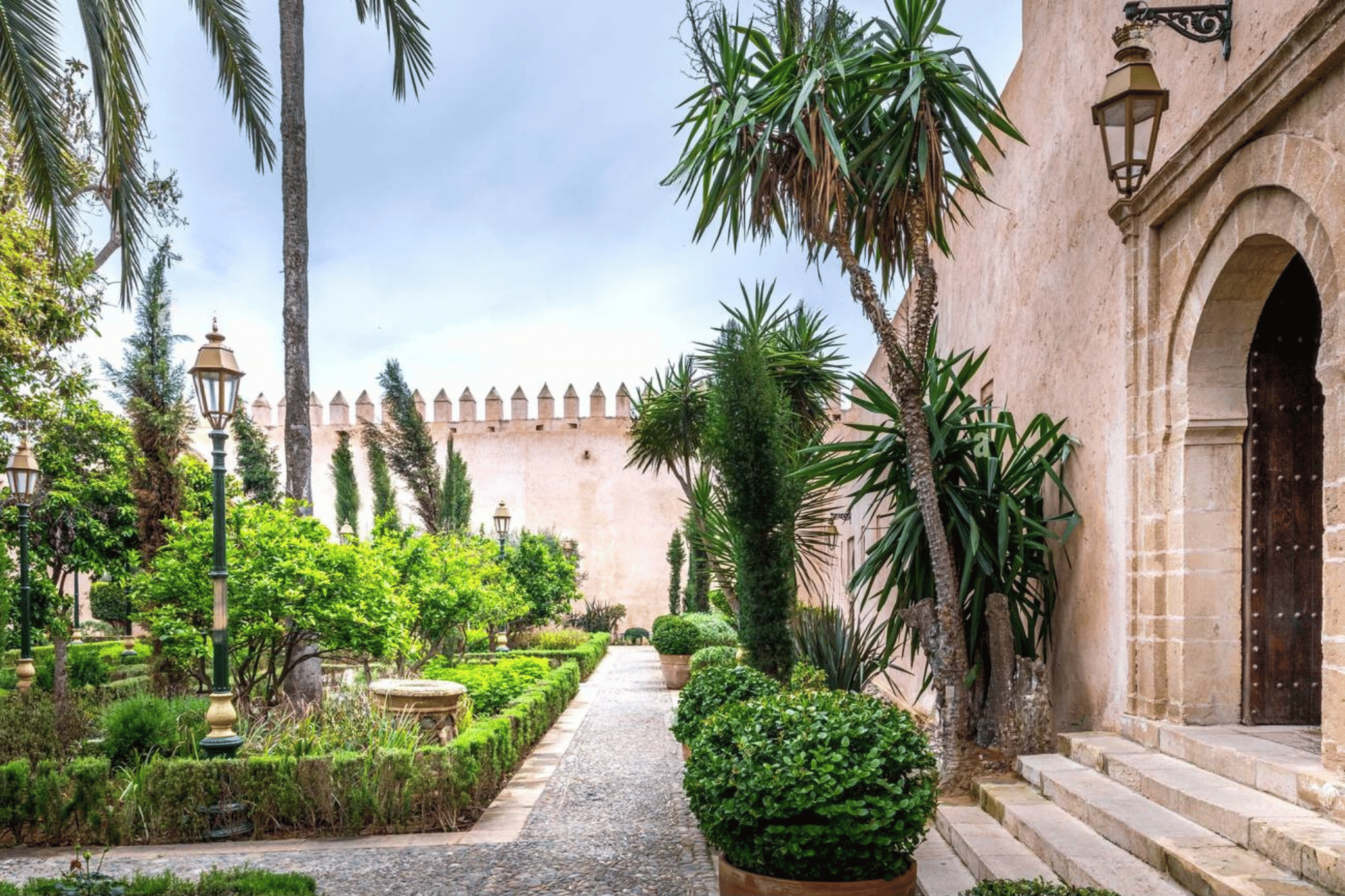
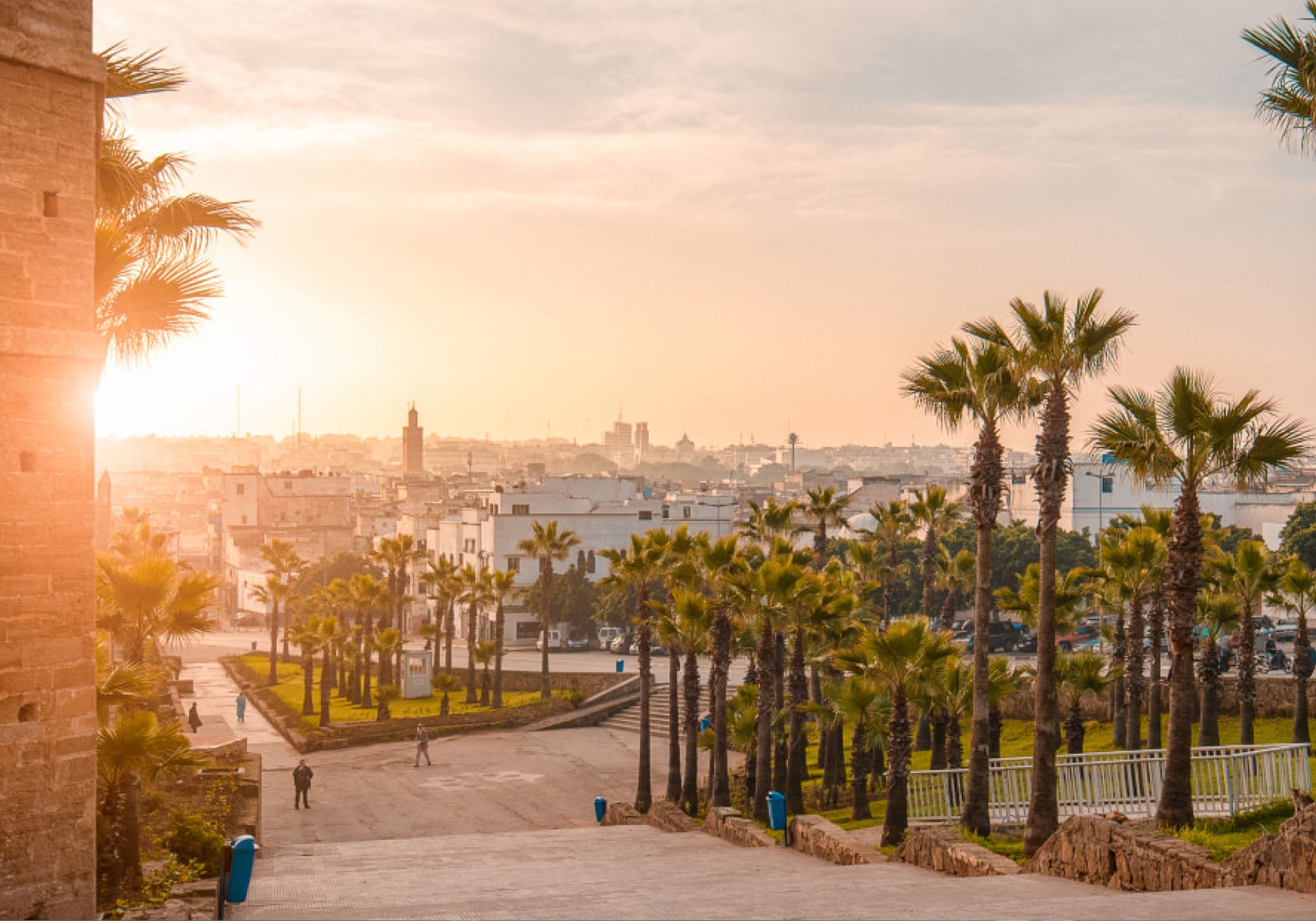
Ancient stone and palm-lined paths trace the edge of Rabat’s old stronghold
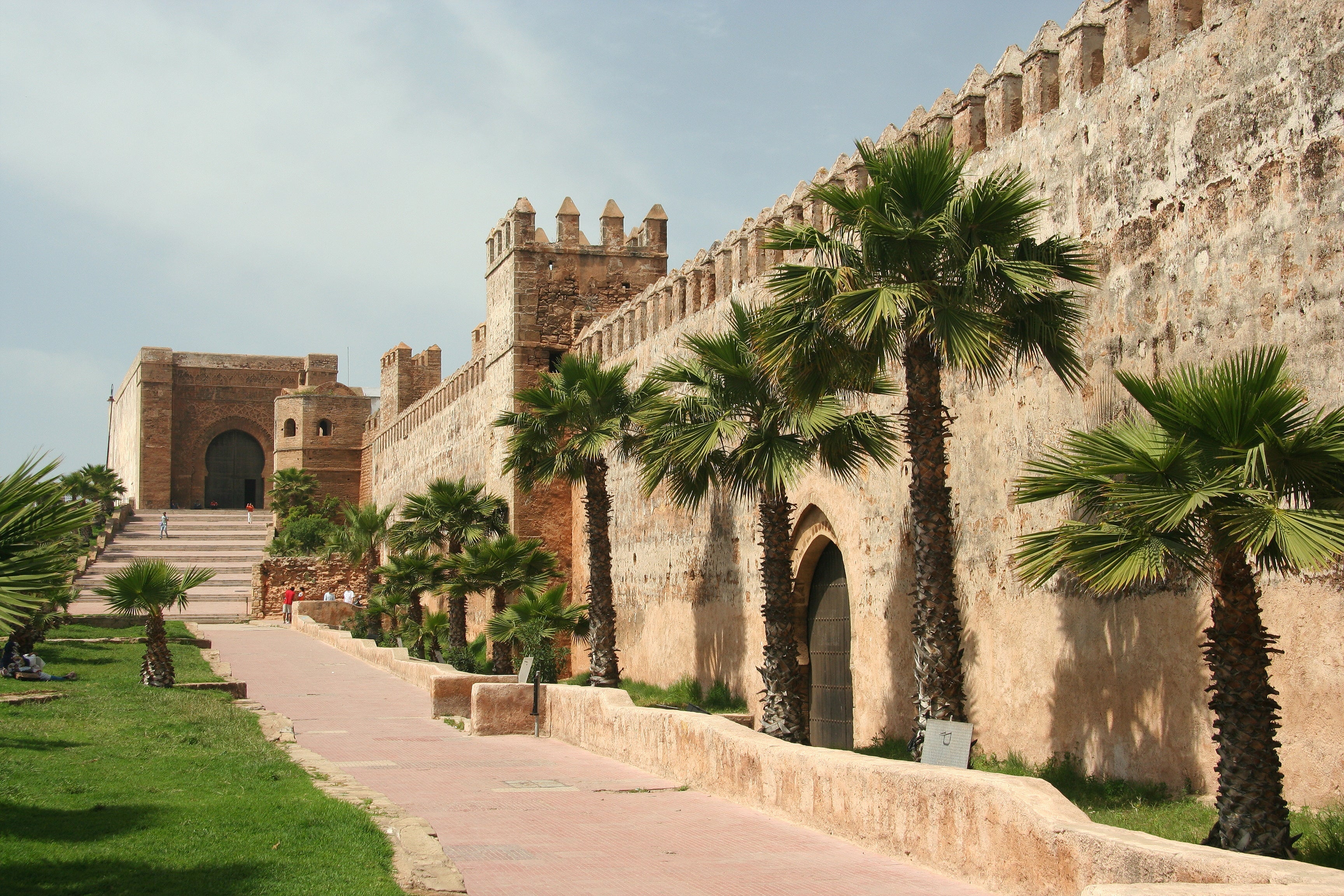
You walk beside stone fortifications that have held this edge of Rabat for nearly a thousand years.
The towers and crenellations rise above a quiet line of palms. Behind them, the kasbah, the river and the life of the city once lay safely held. Light slides across weathered brick as the path draws you closer to the great gate ahead. Footsteps echo softly, just as they would have for traders, guards and travellers passing through long before the modern city took shape. This is the face Rabat once turned to the world: solid, watchful and sure of itsel
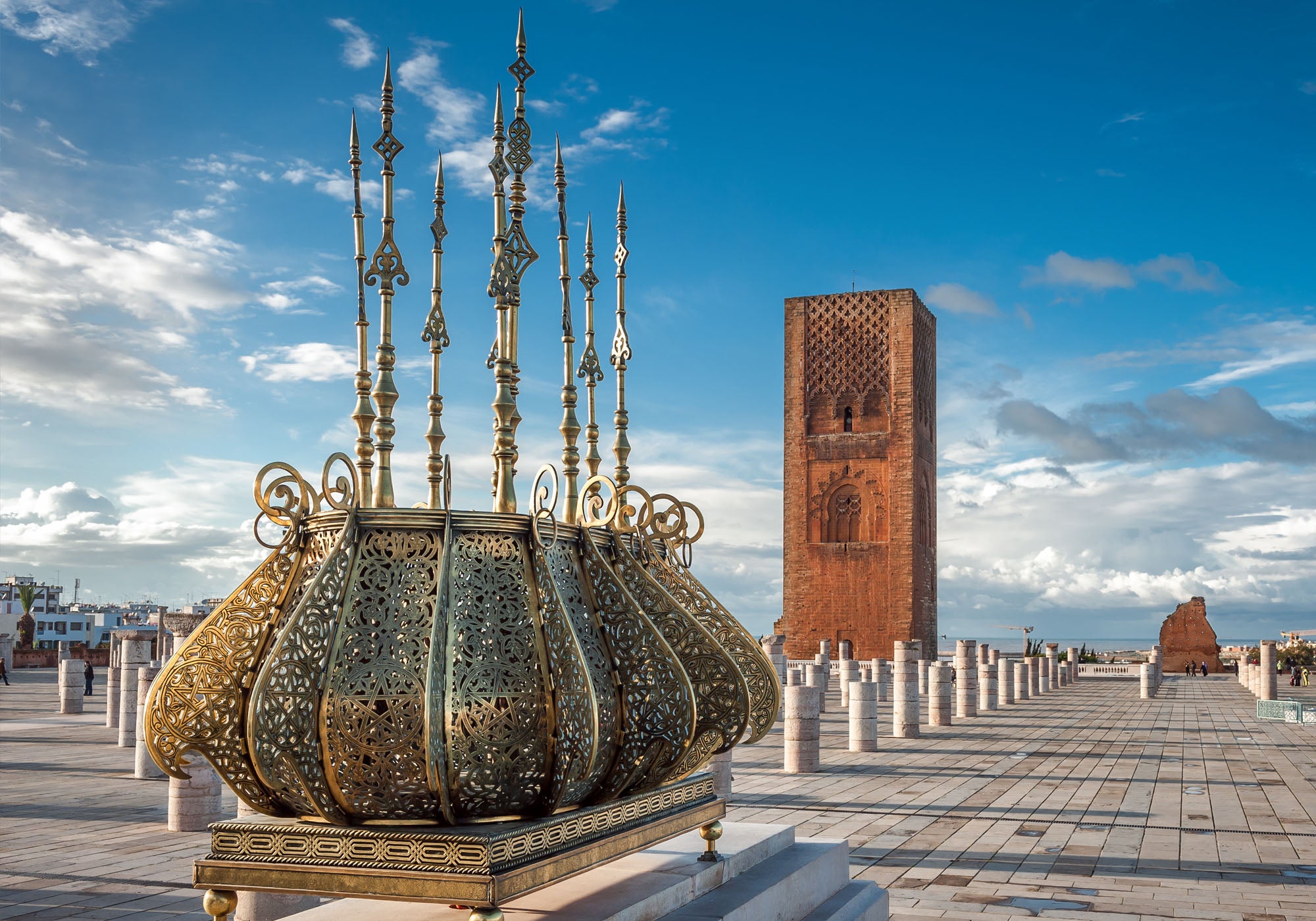
Between Earth and Sky
The Hassan Tower rises above Rabat’s great royal esplanade, where stone, metal and open air hold a distinguished line
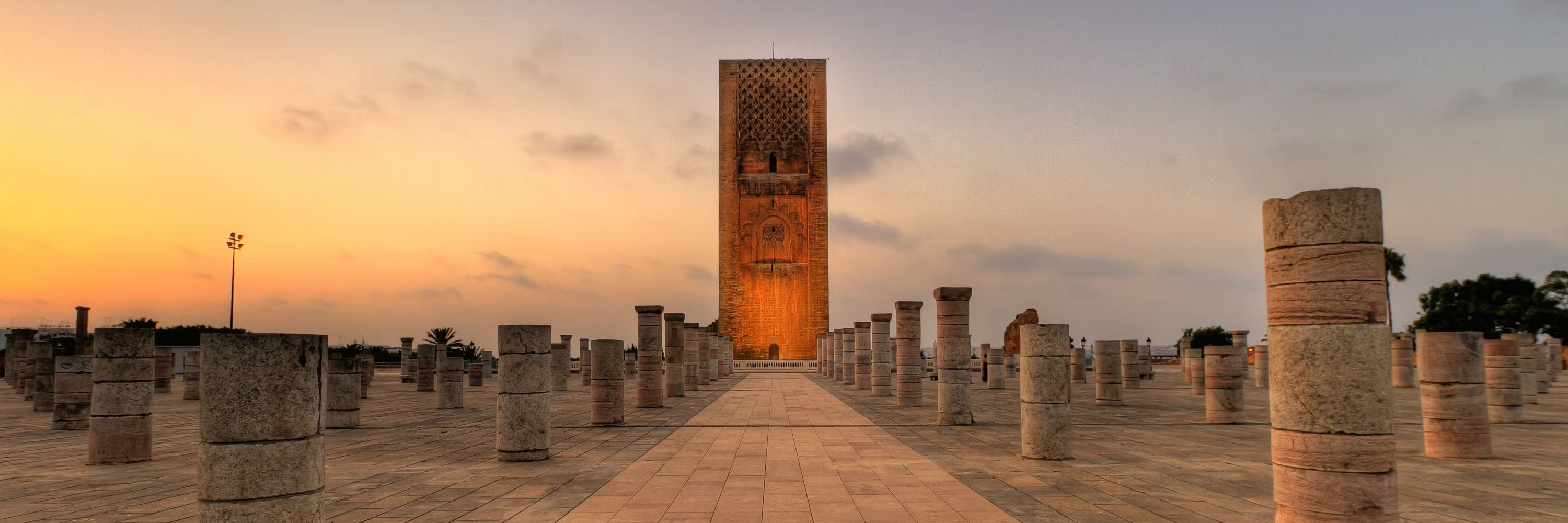
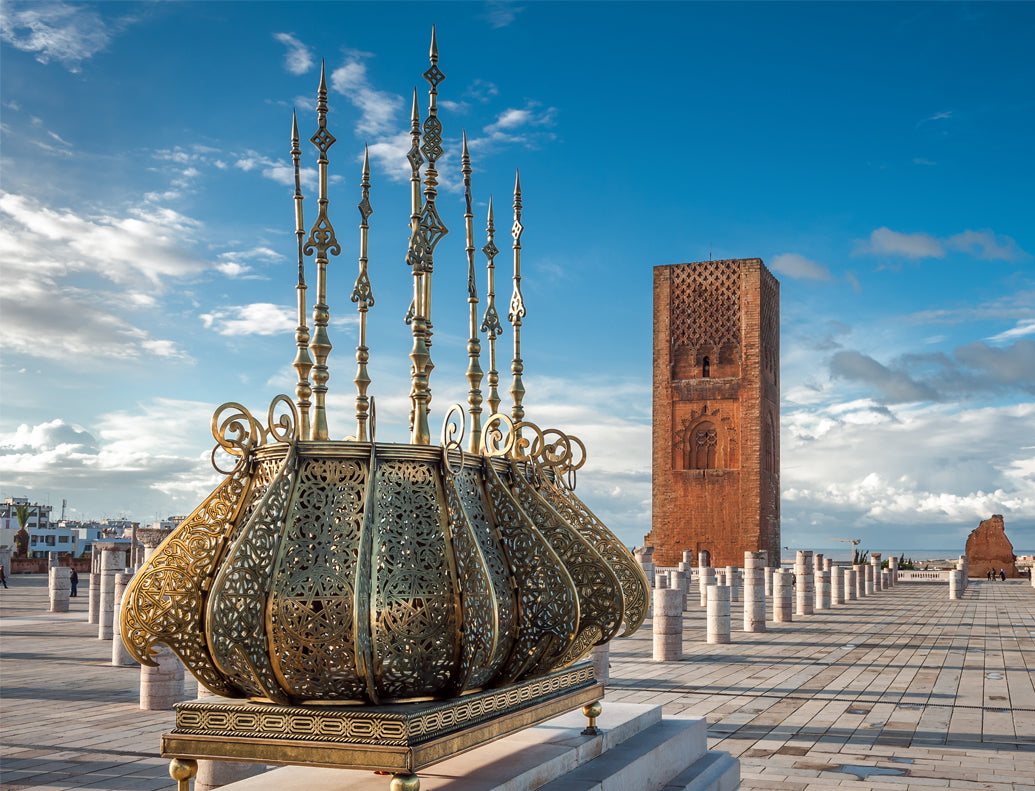
You step onto the wide plaza of the Hassan Tower, its pale stone stretching out beneath an open sweep of sky.
An ornate bronze structure stands in the foreground, its cutwork catching the light as if it were still warm from prayer.
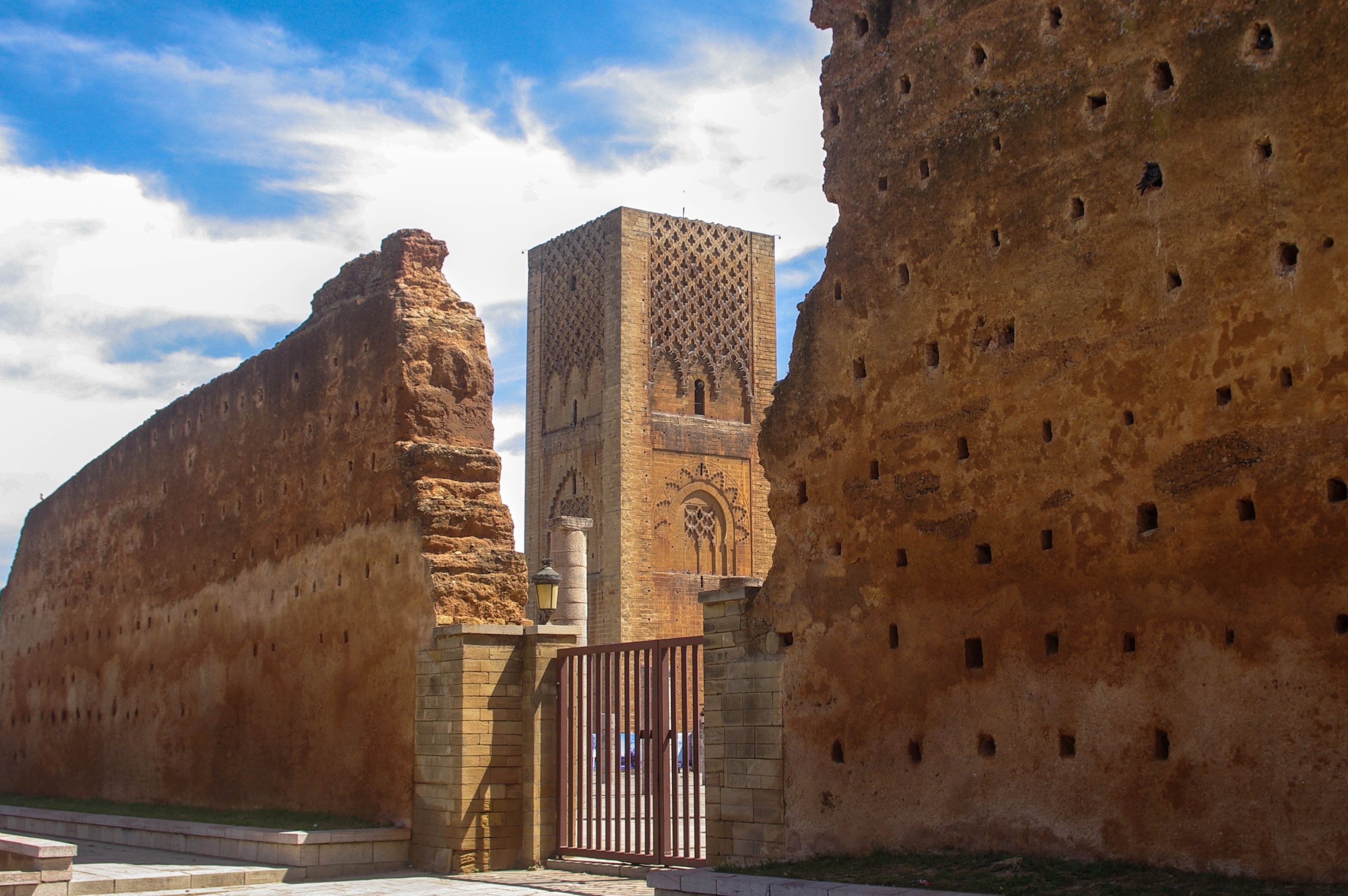
Beyond it, the great minaret lifts from the ground, unfinished yet steady, marking a vision first set here more than eight centuries ago. The Mausoleum of Mohammed V sits close by, anchoring the space with calm, modern reverence. In the Imperial City of Rabat, history and ceremony meet in the open, with nothing but sky between them.
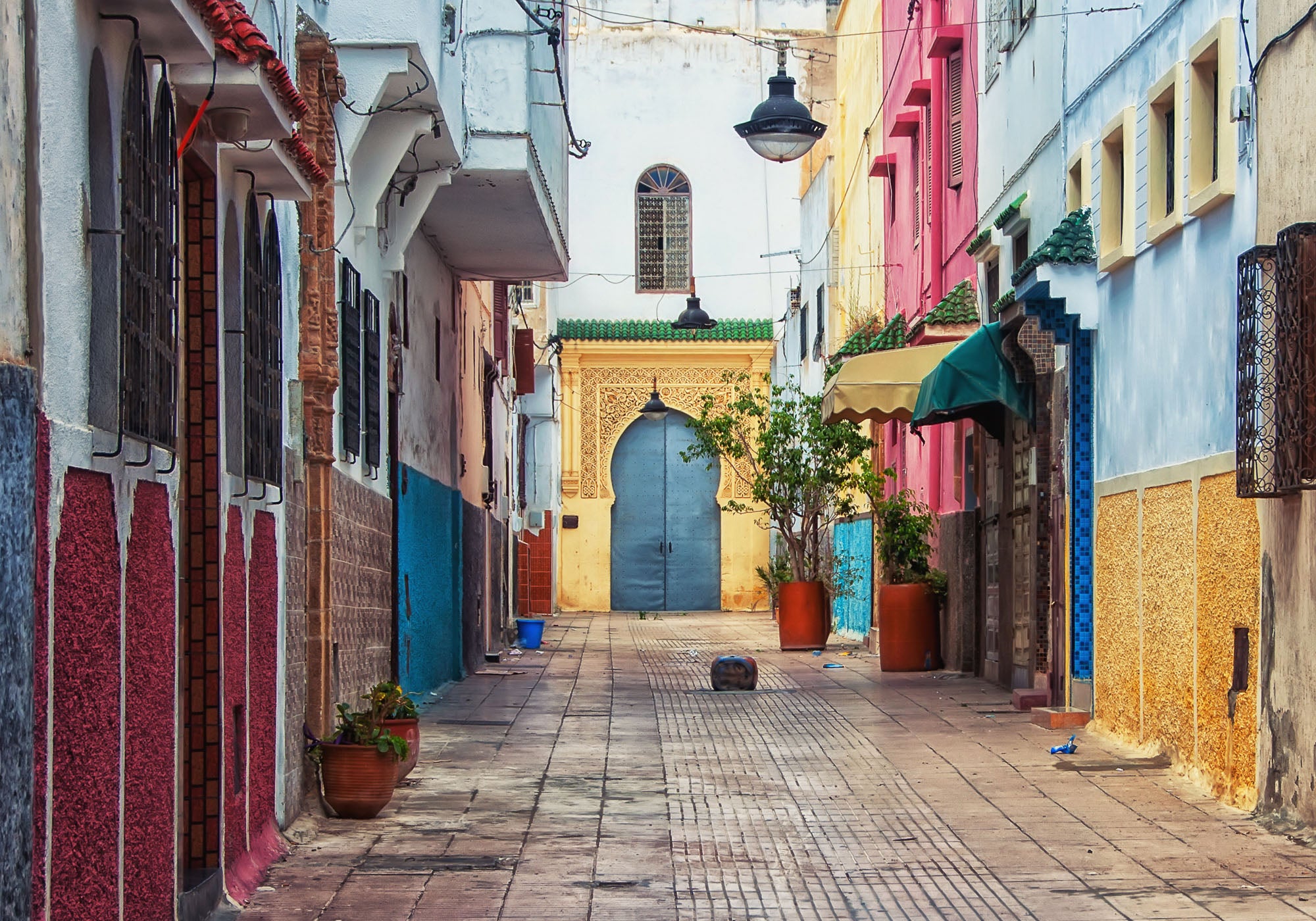
A colourful turn
Rabat offers a delightful fusion of European flair and Moroccan artistry with every step
You wander along a quiet stretch of the medina, where soft blocks of colour and small shopfronts line the way.
Potted trees and hanging lamps break up the walls, shifting with the light as you pass. Ahead, an arched door holds the end of the street, simple and unassuming. It’s the kind of place you only find by walking without a plan. In Rabat, some of the best discoveries happen one small turn at a time.

Imperial horizons
From the marble arcades of the mausoleum, Rabat opens out toward sky, sea and centuries of ceremony
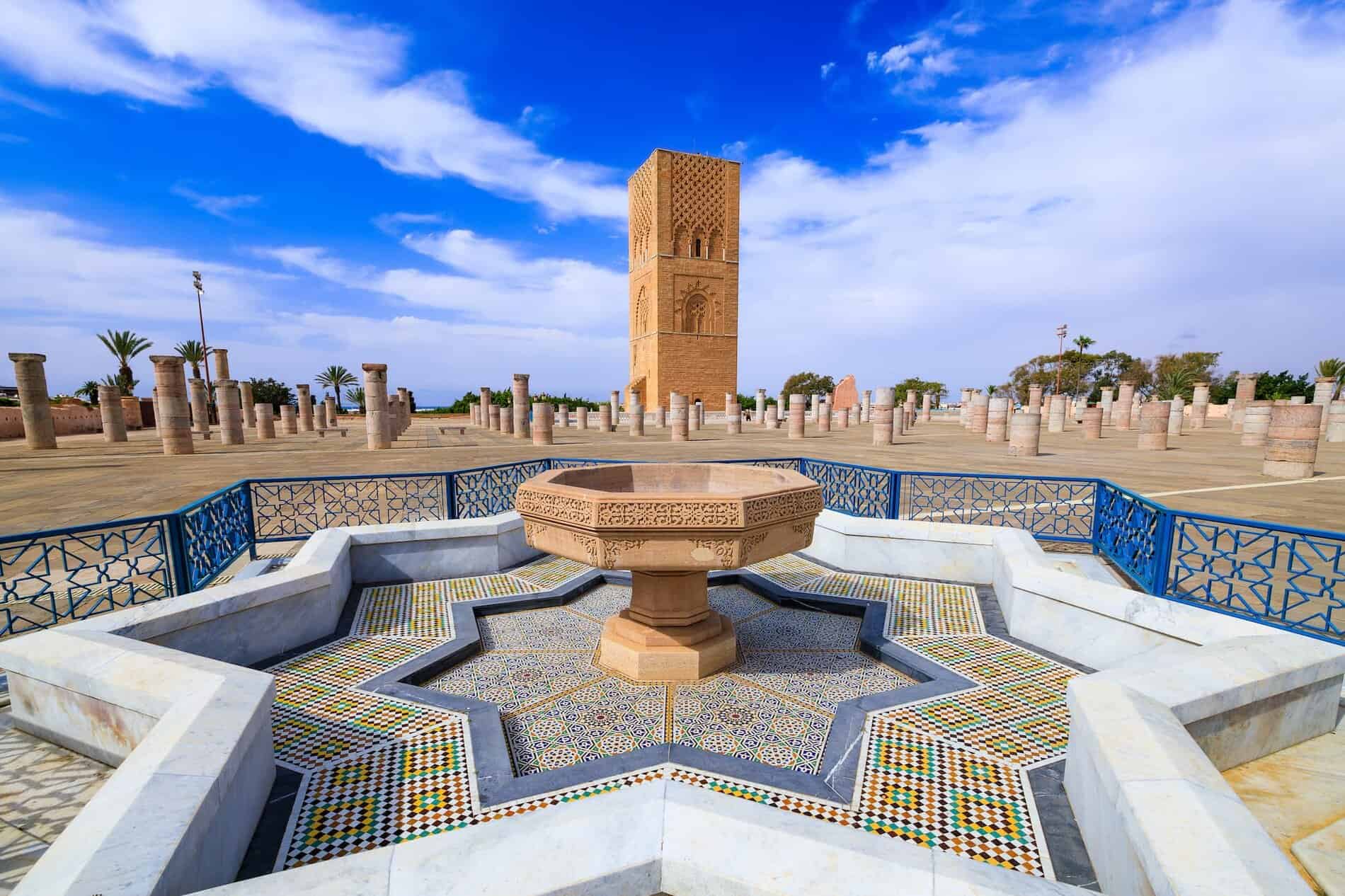
Beneath carved arches, a sweep of pale stone opens out, where the space between columns feels as carefully measured as the patterns beneath your feet.
The Hassan Tower rises across the esplanade, unfinished yet unwavering, set against a wide Atlantic sky. Light moves slowly over marble, drawing soft lines that shift as the clouds pass. Beyond the colonnade, the city and the ocean begin to blur together. Here, Rabat feels both grounded and open, holding its place (holding its own?) between history and horizon.

Carved doorways, quiet courtyards and small details reward the unhurried
At the threshold of history
Along Rabat's narrow lanes, cedar entryways and ornate stone frames give each building its own identity.
Whitewashed walls and deep blue paint set off the grain of old wood and the worn edges of tile. Potted citrus and climbing plants soften the line between street and home, hinting at the gardens tucked just out of sight. Light slips between the buildings, catching on metal knockers and latticework as the day moves on. In Rabat, it’s often what lies just beyond the threshold that lingers longest.
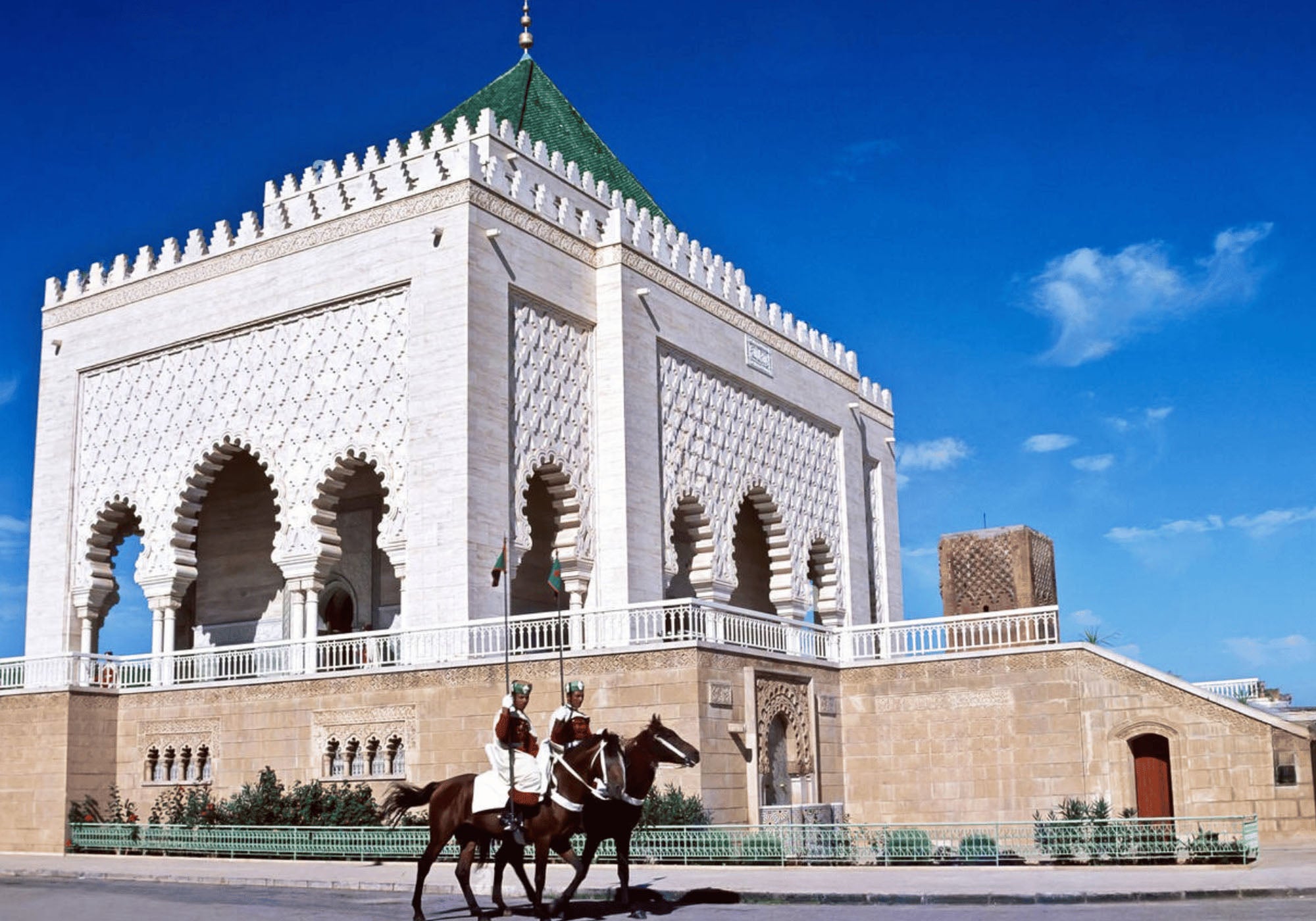
Royal vigil
Observe tradition and ceremony standing sentinel at the edge of Rabat’s most revered ground
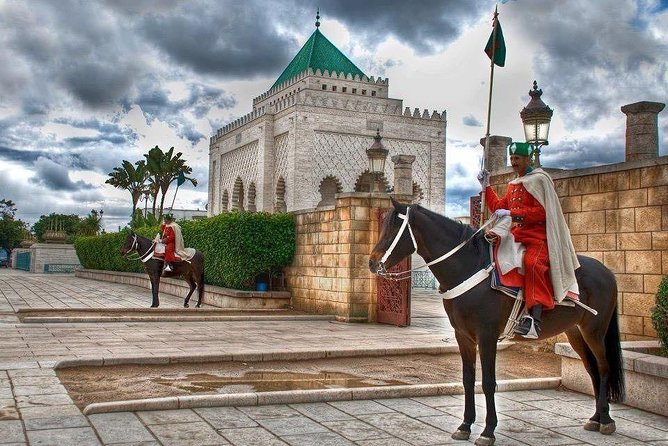
Beneath serrated arches, the Mausoleum of Mohammed V rises in pale stone and green tile, watched over by mounted guards in crisp white.
Hooves move softly across the forecourt, a steady rhythm against the stillness of the building behind. This is a place shaped as much by ritual as by architecture, where every detail feels considered and kept. The city flows around it, but here time seems to pause for a moment of respect. In Rabat, even the everyday carries a profound sense of honour.
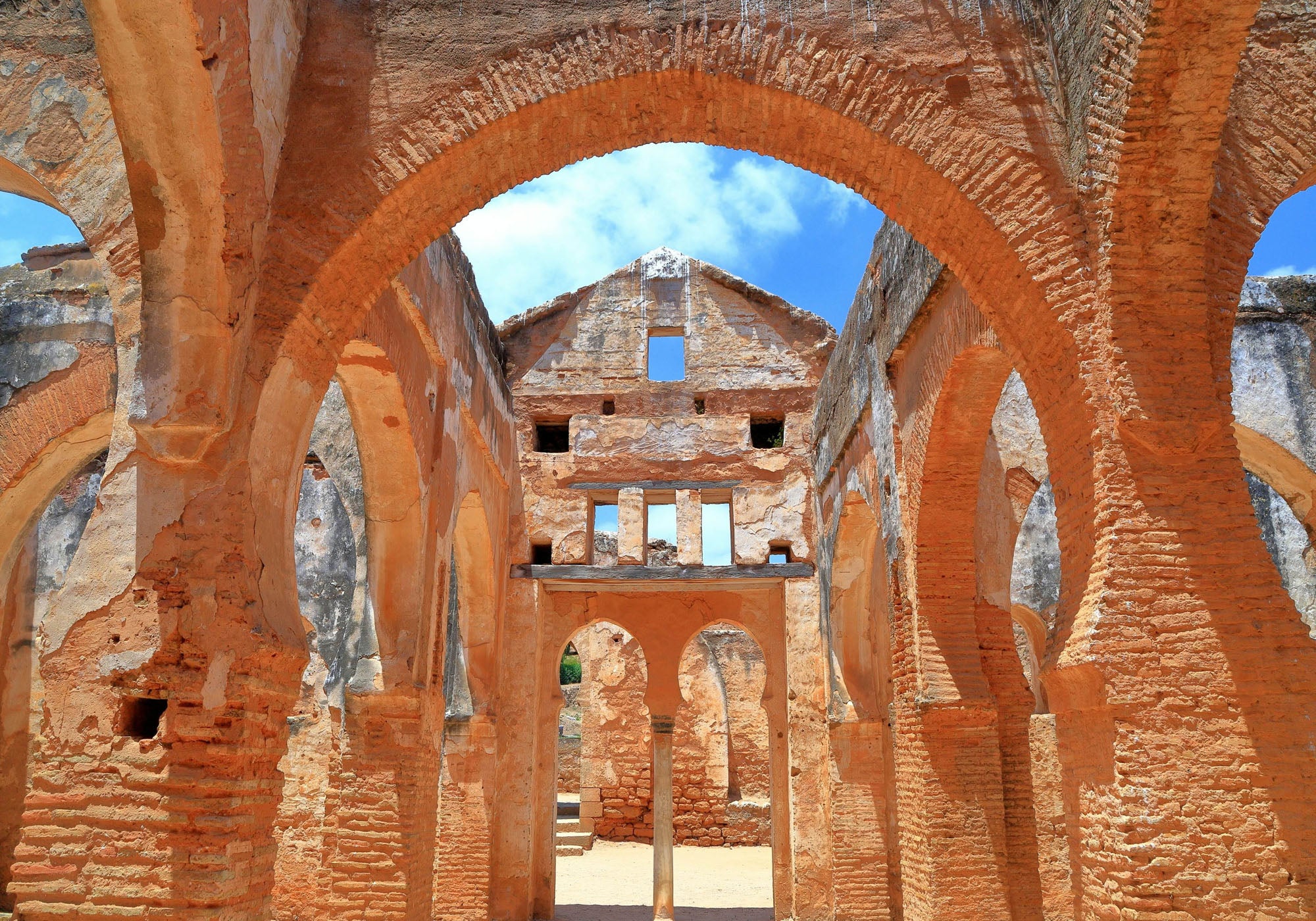
Echoes of the Ancients
Within the 14th-century ruins of Chellah, open arches and sky hold Rabat’s earliest nobility
Sun-warmed brick and time-weathered plaster frame a series of soaring arches, their edges softened by centuries of wind and wear.
Once a Marinid royal necropolis and sacred sanctuary, these walls were built to honour the dead and protect what lay within. Light pours through empty windows, casting clean shapes across the ground below. Every step carries a faint sense of what once moved through this space. In Rabat, even ruins speak with an authority beyond time.
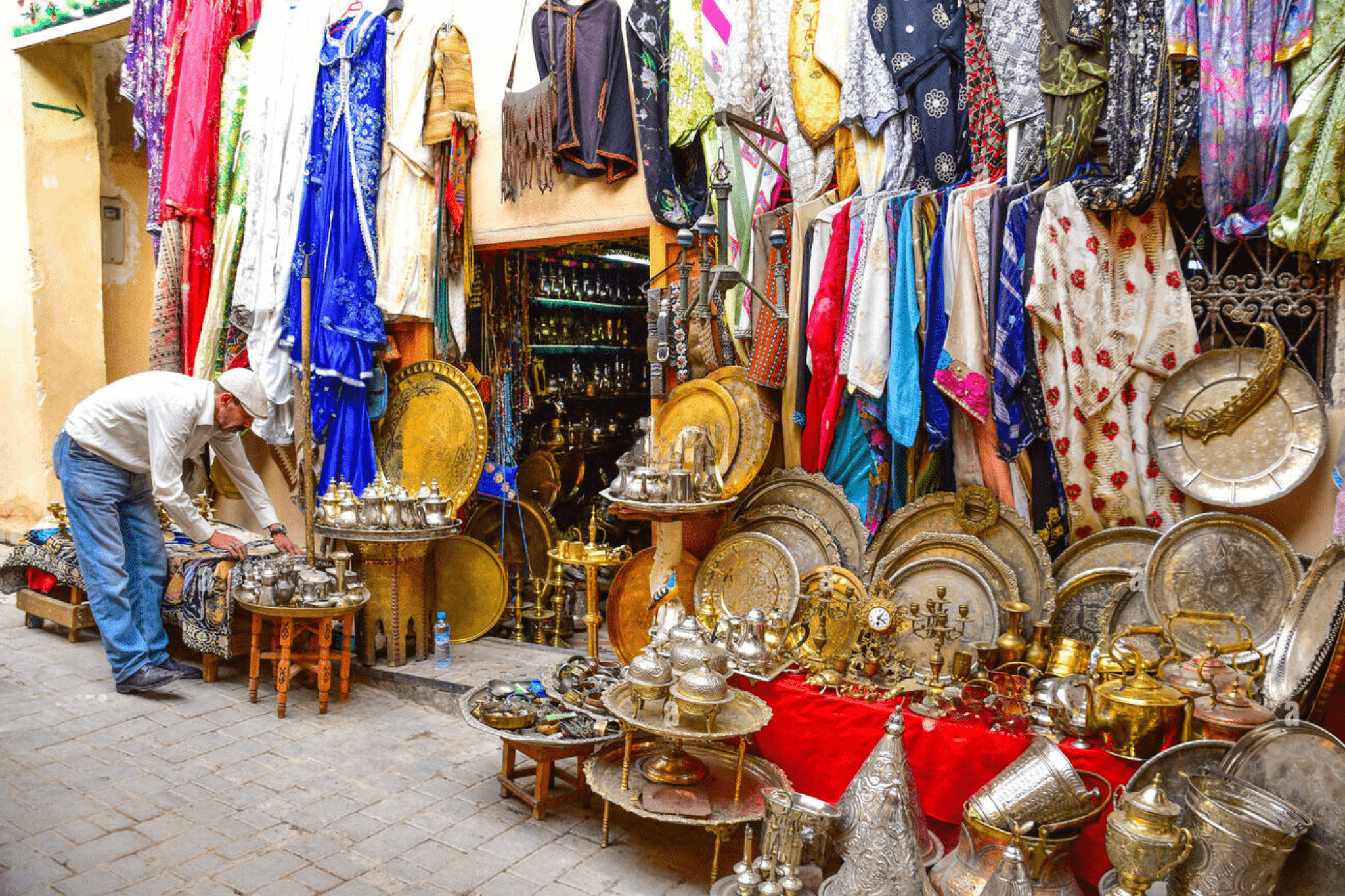
Stroll the boulevard
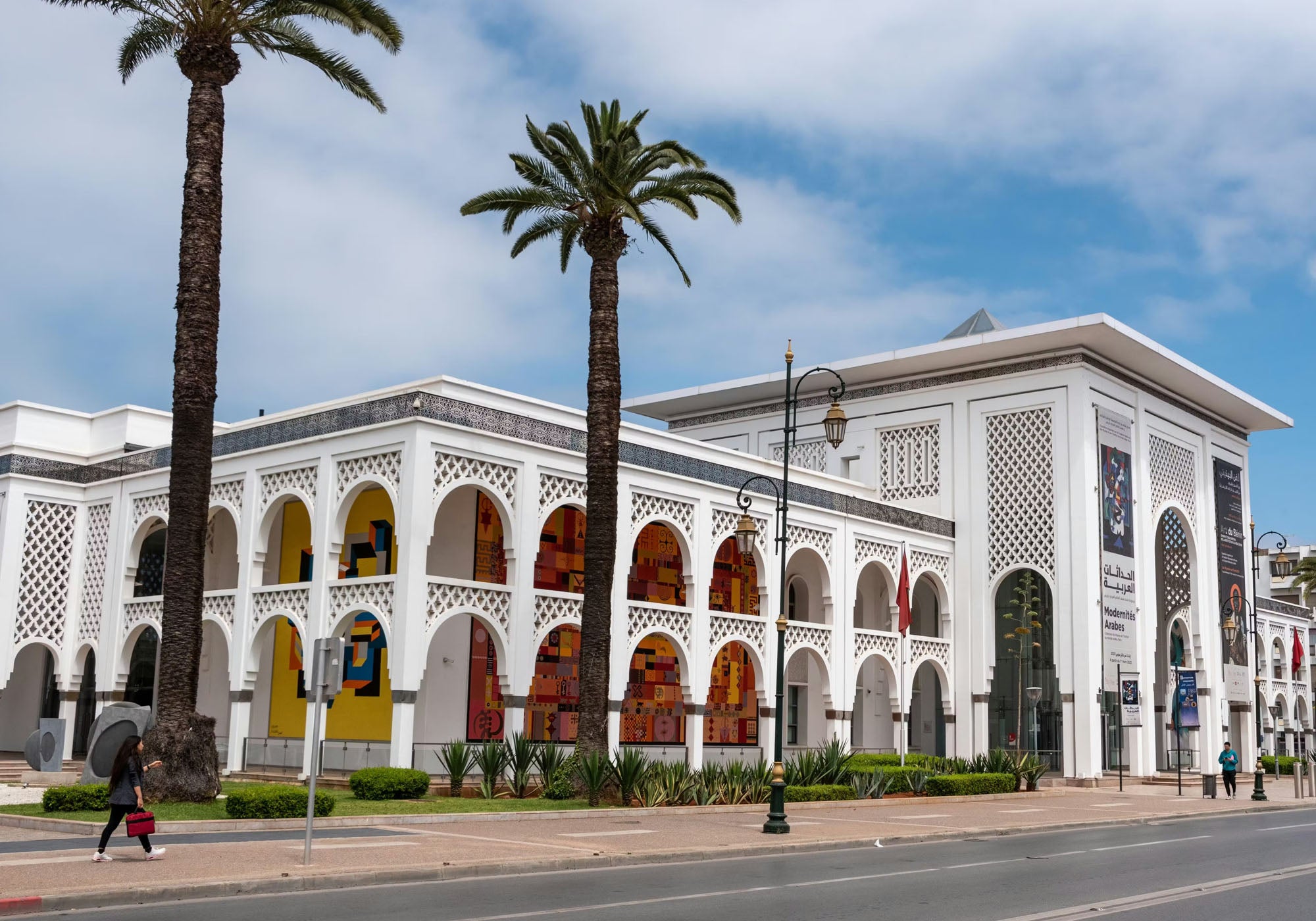
Contemporary culture and Moroccan craft share the same bright, open stage along palm lined promenades
Away from the medina and government buildings, white arches and patterned screens line the capital city’s modern streets.
Bold works of Moroccan art bring colour and energy to the intricate façades. Palms and wide pavements leave space for an easy drift between galleries and cafés. Morning light settles on tables and tiled walkways as the day finds its pace. Here, Rabat shows itself in the present tense, confident and outward-looking.

Across the Bou Regreg
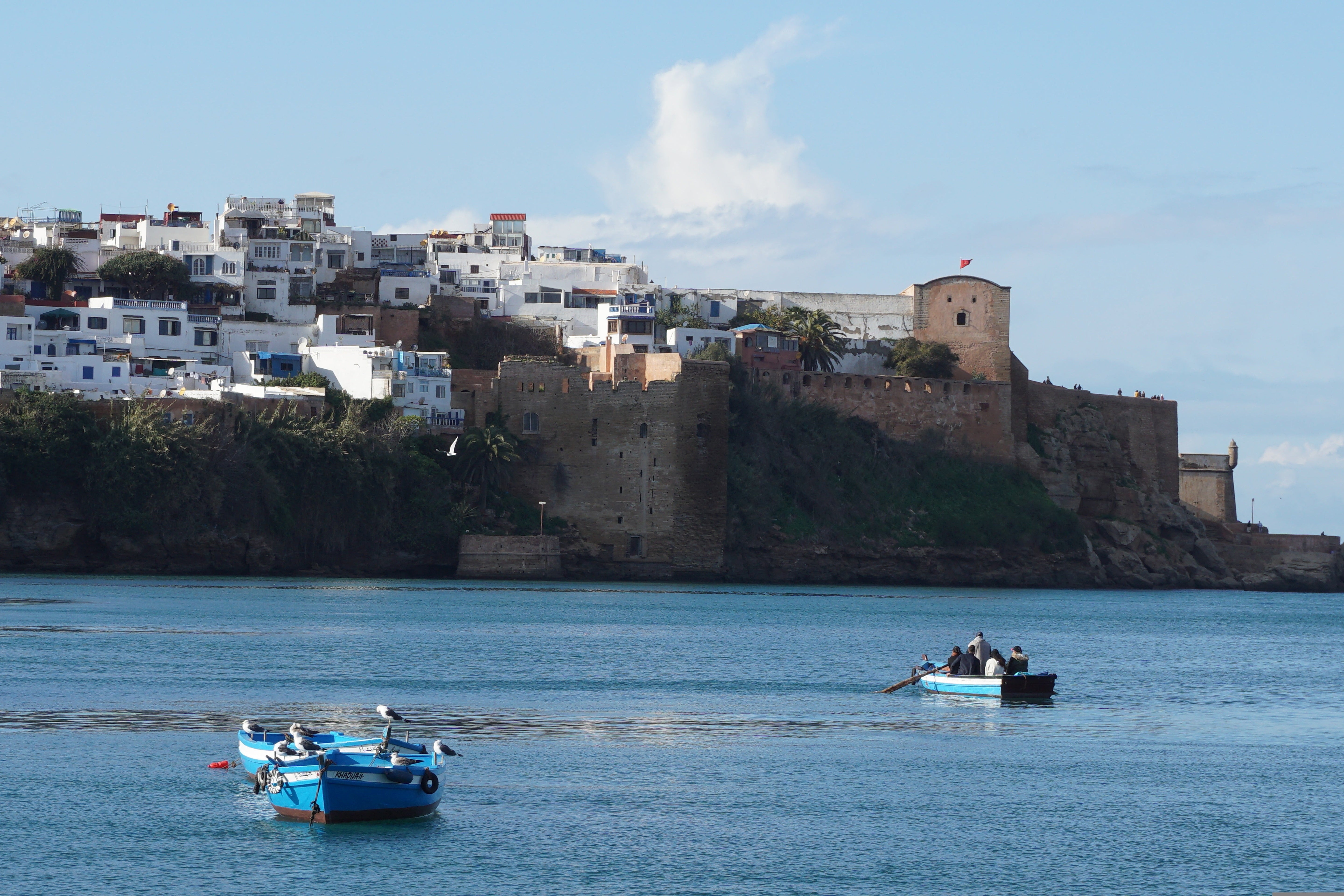
Rabat’s kasbah and old walls rise above the river and the working boats below
Stone ramparts rise above the Bou Regreg estuary, holding the whitewashed kasbah high over the water.
Below, small fishing boats drift and gather along the quay, their colours breaking across the blue. Cats sun themselves on the stone bollards along the quay. The promenade curves along the shore, lined with palms and the steady movement of people passing between city and river. Beyond the walls, Rabat stretches back into layered streets and rooftops. From this vantage point, the capital feels expansive, where history, the present and the turning tide share the same horizon.
Rabat’s old quarter softens into colourful, lived-in comfort along its quieter lanes
Hidden Corridors of the Old Quarter
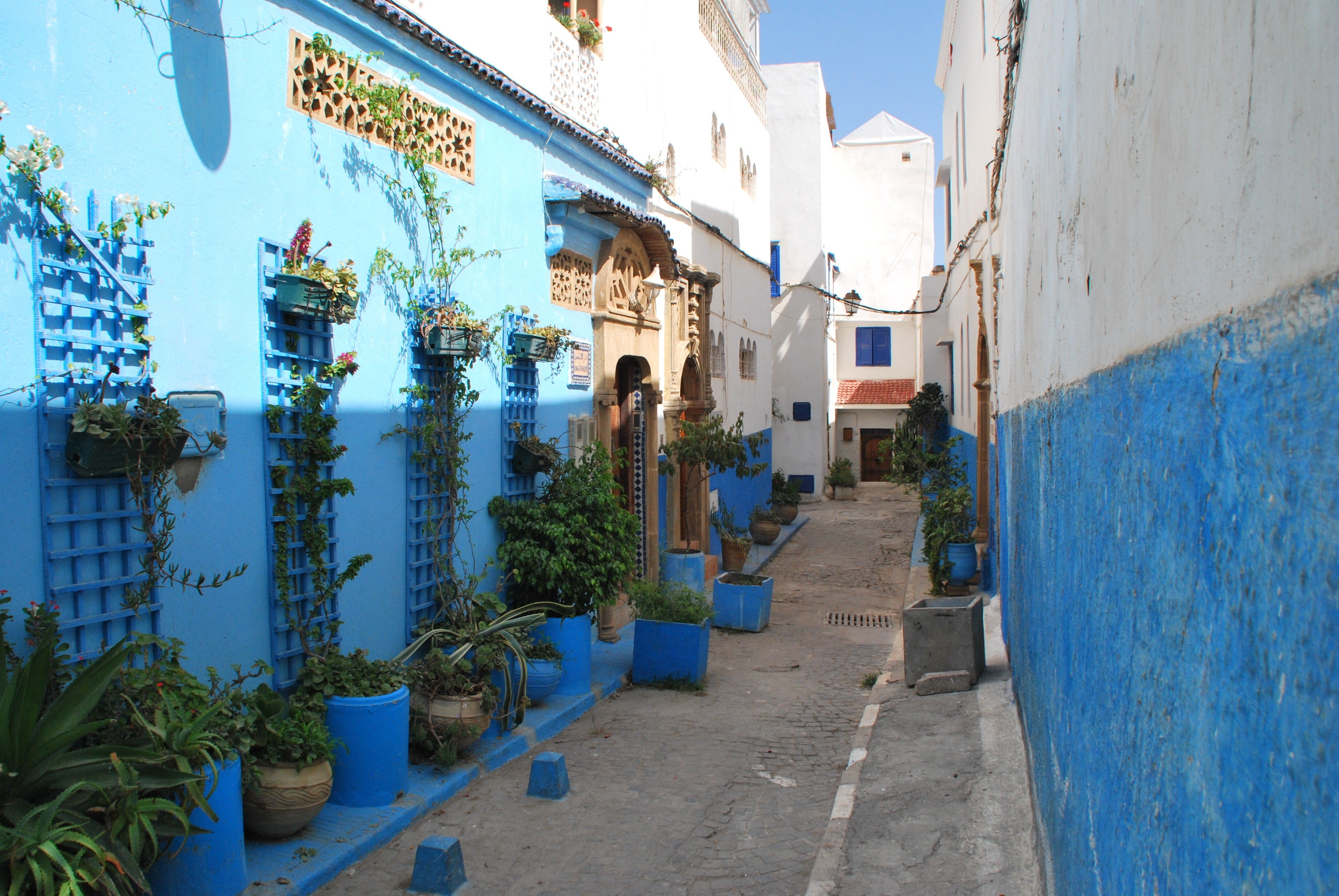
Trellises climb the walls and clay pots line the ground, turning this narrow passage into something you don’t hurry through.
No cars pass here; aged wooden double doors open straight onto the cobbled alley, their stone frames worn smooth by years of use. Herbs, flowers and small trees lean in from every side. Light slips down between the buildings, settling on leaves and painted stucco as the day moves on. This is where people move between errands, conversations and moments that never make it into guidebooks.
NEXT STEP → START CUSTOMIZING YOUR MOROCCO TRIP
Because we're from Morocco, and have lived throughout the Kingdom, we can offer you unmatched expertise in planning an unforgettable Morocco holiday.
What you can expect from Journey Morocco