

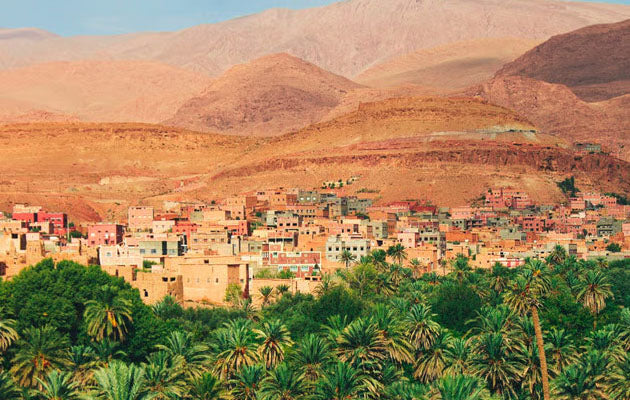



More about Meknes
Whether you're navigating through the Roman ruins at Volubilis or trekking to the Maranid Tombs, the hills surrounding Meknes are a treat for all the senses.
From the vast gate of Bab Mansour, to the extravagant interior of the tomb of Moulay Ismail, each of Meknes' sites is a fasinating study in Moroccan life and legacy.

Why travel to Meknes with us?
A breathtaking display of imperial opulence, you can't help but feel overcome by an 'anything is possible' attitude here.
Decadance of the grandest proportions, perfectly complemented by a unique blend of cultural diversity and heritage; a visit to Meknes truly does have it all – and then some.

What to See & Do in Meknes
Explore the subterranean Prison de Kara, an immense vaulted chamber built beneath the ground to house thousands of labourers. Afterwards, visit the Museum of Moroccan Art (Dar Jamai) to see exquisite embroidery and jewellery housed in a palace of soaring ceilings and fragrant gardens.

Take a royal step back in time
Meknes is a city built by sultans, still alive in the bustle and commerce under its span
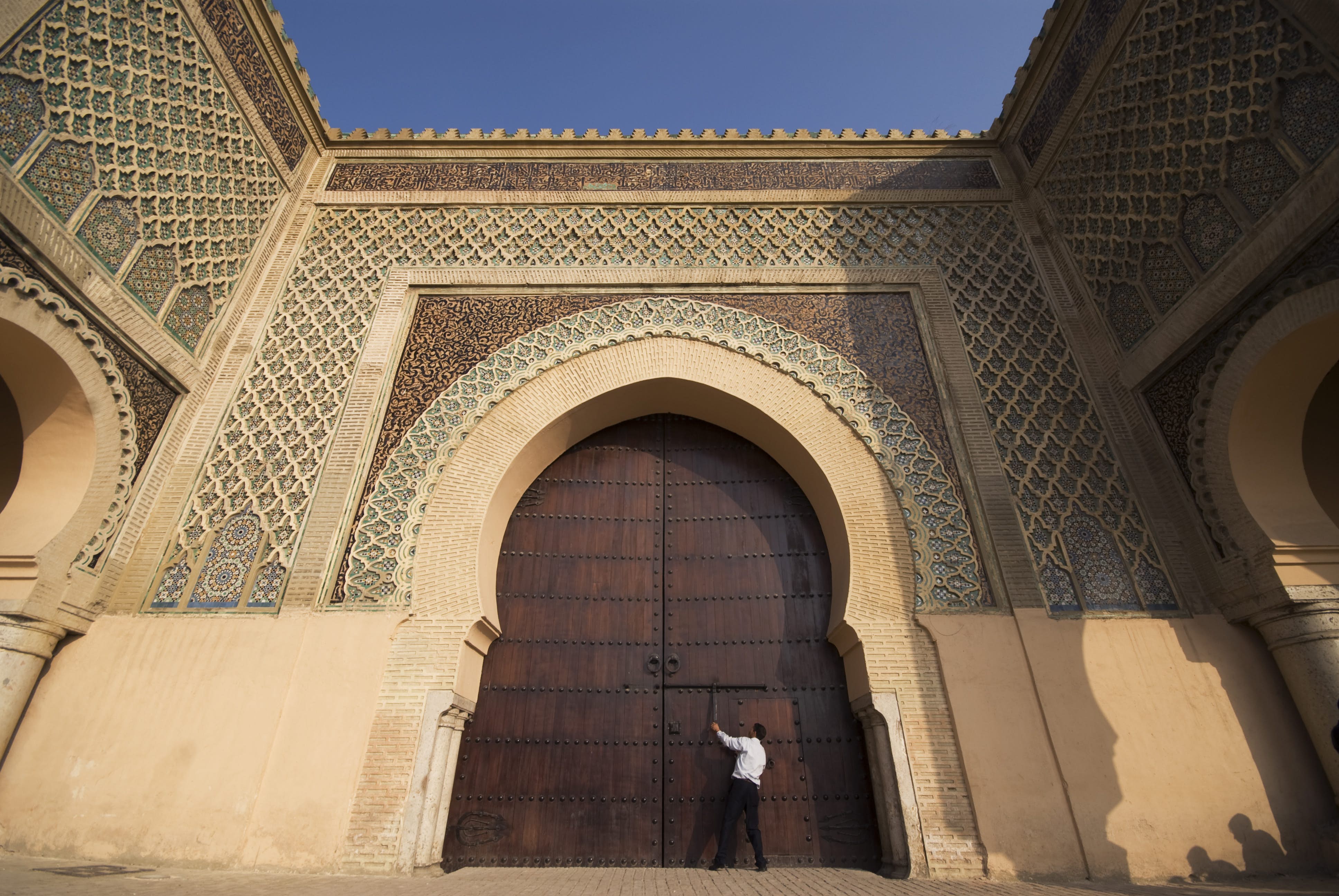
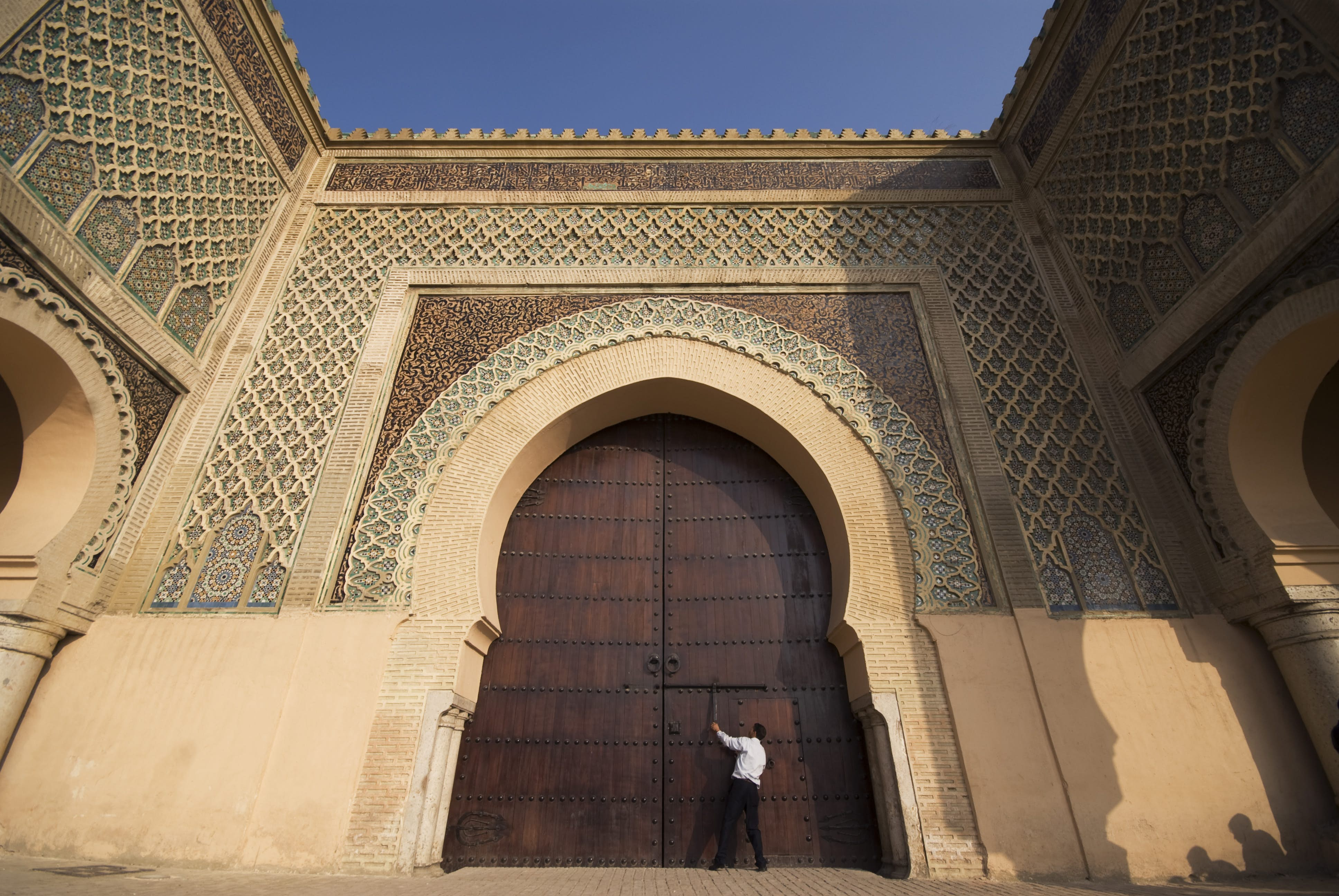
El Hedim Square opens beneath the towering arches of the monumental Bab Mansour gate.
Sculpted turquoise and gold zellij tiles catch the sun across time‑worn surfaces, and ornate Arabic calligraphy lines the lintels, celebrating the sultan’s reign and victories. Locals in djellabas and patterned scarves thread between massive brass-studded doors, while the echo of horse-drawn carts rolls across the stone plaza. Street vendors display hand‑woven carpets, pottery, and metalwork where space allows. Men linger in the shade of the columns. The scale of the 18th-century Alawite dynasty fortification is felt as much as seen, and has been known to instill a lasting sense of wonder.

Pause in a hallowed space
The solemnity of the space draws visitors into an intimate dialogue with history and devotion
The open ceiling in this tiled courtyard lets shafts of sunlight fall across patterned zellij and carved columns.
Red-carpeted floors soften footsteps over hand-laid tiles in this chamber near a 9th-century tomb. Pilgrims gather at the central ablution fountain, performing ritual cleansing with measured reverence. The air carries the faint scent of incense and aged wood, while voices rise and fall in whispered prayer as people kneel and reflect.

Dance to the beat of a traditional drum
Music, colour, and life converge beneath towering carved arches
Beneath the ancient gates, a brightly-clad Berber drummer adjusts his tasselled straw taraza, brass bells gleaming as he prepares to sound his darbuka.
Each drumbeat carries the weight of a proud heritage, tracing celebrations, processions, and communal gatherings back to the Alaouite sultans. Visitors pause, captivated by the display, while the marketplace rings with merchants’ calls, craftspeople at work, and monkey-handlers pausing for passerby photo-ops with their mischievous charges.

Savour the twilights’ imperial glow
Soaring arches frame the rituals and echoes of a bygone dynasty
Lanterns ignite along the gate as the day cools, casting warm light across jagged battlements and sculpted doorways.
Passersby move with purpose, yet solemnity hangs in the air — a moment to feel the weight of dynasties past and the dignity of a city built to shield, protect, and impress. As sun and stone meet, old Meknes exhales its history, inviting stillness and reflection.

Take in the mastery of Moroccan architecture
Where arches, inlay, and intricate motifs trace centuries of Moroccan artistry and imperial vision
This is where plans recalibrate. Meknes doesn’t rush the exchange; it compresses it, asking you to slow, observe, and fall into line before anything else happens.
The rhythm is practical, unshowy, and quietly assertive—an inherited way of organising people, movement, and time that still holds.
Crossing here, you feel the shift immediately. Streets tighten. Purpose sharpens. The city stops explaining itself and gets on with the day, confident you’ll either keep up—or learn how.

Cross beneath Bab Mansour by carriage
In Meknes, time slows down, whether you planned for it or not
A horse-drawn carriage moves over cobbled ground beneath Bab Mansour, following a route once shared by royals, traders, and anyone else with reason to pass through.
Meknes doesn’t rush first impressions; it filters them, letting the outside world compress before releasing you inward. Movement gathers, pauses, reshapes itself — then continues, unconcerned with who happens to be crossing. Wooden wheels follow the curve of the road, hooves set the tempo, and the arches pass overhead, tall enough to still conversation as you move beneath them. By the time you emerge on the other side, you’re no longer arriving. You’re already within the city’s daily flow.

Climb to the Marinid Tombs
An easy ascent that puts Meknes, its hinterland and its dynasties into focus
A short drive and a steady climb bring you to the Marinid Tombs, a 14th-century hilltop burial site left open to the elements and the wide horizon. The stonework is spare and weathered, but the setting does the talking.
Go early, before the day heats up, and you’ll have Meknes laid out below in clean lines: ramparts, rooftops, fields, and the roads that tie them together. It’s the perfect primer before you drop back into the imperial city — a quick dose of altitude that sharpens your sense of where you are, and why this place mattered.


People-watch in Place El Hedim
A working square where Meknes gathers, trades and passes the time
Late afternoon draws people out into Place El Hedim, the broad plaza pressed against the city walls with Bab Mansour close at hand.
Vendors arrive with carts and folded blankets, balloons lift above the crowd, and loose circles form and dissolve as conversations take hold, drift, and regroup. The square is built for gathering, its scale giving space to the city’s daily business and gossip as they play out in the open. Pause at the perimeter and watch the patterns emerge: families cutting across on familiar paths, buyers and sellers mid-negotiation, teenagers climbing walls and testing boundaries. This is Meknes in full view, using its largest civic space exactly as it has always done.

Explore the Royal Granaries of Moulay Ismail
Built in the 17th century to house the sultan’s horses – and sustain the empire – Heri es-Souani was designed for scale, endurance, and absolute efficiency
The Royal Granaries stretch in long, muscular lines, their earth-toned walls pierced by high openings once used for light, air, and control.
Step alongside the walls and the logic becomes clear: thick masonry to hold cool temperatures, vast internal volumes, and a layout engineered to sustain Meknes through siege or surplus. Palms and scrub soften the edges now, but the ambition remains unmistakable. This was infrastructure as power — practical, immense, and unapologetically imperial.

A spiritually symbolic shared language of stone, wood, script, and geometry
Learn to read Moroccan architecture
Stand still long enough and the structure begins to speak.
Ornate columns rise in steady proportion, arches layer inward, and carved stone gives way to cedar panels worked line by line, each cut deliberate. Qur’anic calligraphy moves through the space as text and as form, phrases chosen for blessing and protection, shaped so meaning carries weight as well as sound.
Beneath, hand-painted zellige anchors the composition, its repeating geometry reflecting order without a centre, with blues, greens, and mineral tones drawn from landscape and tradition. Nothing here asks for attention. It rewards it. This is the visual literacy that underpins Morocco’s imperial cities, leaving you better equipped to recognise craft, power, and belief wherever you encounter them next.



NEXT STEP → START CUSTOMIZING YOUR MOROCCO TRIP
Because we're from Morocco, and have lived throughout the Kingdom, we can offer you unmatched expertise in planning an unforgettable Morocco holiday.
What you can expect from Journey Morocco